Author: Ryan Bohl

  • Trump Can’t Count on Another October Surprise

    Donald Trump
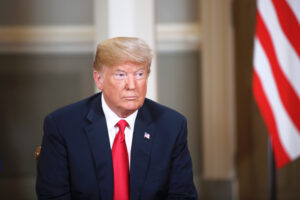
    American president Donald Trump attends a meeting in Helsinki, Finland, July 16, 2018 (Office of the President of the Republic of Finland/Juhani Kandell)

    President Donald Trump’s (not so) shocking coronavirus diagnosis had all the markings of the fabled “October surprise” American election-watchers look for every four years.

    In the world of geopolitical forecasting, you would call an October surprise a “Red Dragon”: something rare, highly impactful, yet to an extent foreseeable. This contrasts with a “Black Swan”, which comes out of nowhere.

    Trump getting COVID was certainly a Red Dragon: wandering around campaign events without wearing a mask and taking only the barest precautions, it was more surprising that it took him so many months to contract the disease.

    From the standpoint of who will win the election, the diagnosis seems to only have reinforced Joe Biden’s lead, not undercut it. Polls suggest Americans have little sympathy for the president, and his maskless bravado on Monday on the White House balcony surely won’t convince them that this is a man who takes the pandemic, and his own health, seriously.

    Could another October surprise flip the script for Trump?

    Probably not. Here’s why. (more…)

  • Please Don’t Worry About World War III

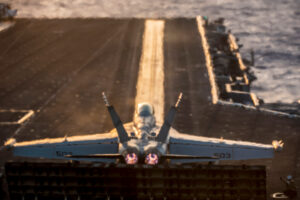
    American EA-18G Growler jet
    An American EA-18G Growler electronic warfare aircraft prepares to launch from the aircraft carrier USS George H.W. Bush on deployment in the Mediterranean Sea, June 9, 2017 (USN/Matt Matlage)

    It’s been a while.

    As balances become clearer, life is better sorted and all that jazz, I find myself pulled, like the United States in the Middle East, back to the fray.

    As it happens, I’ve found I can — and in some ways, must — do an update there and again on Geopolitics Made Super. The point of this blog remains the same — to take something in the headlines, something that is oft-Googled, and break it down to the basic geopolitical building blocks what creates behavior. If you want the hardcore angle, please do see my work over at Stratfor — who does not, by the way, represent or endorse what I write here. This remains a personal blog, in which I hope that those who stumble upon it are given the basics necessary to understand the world just beyond the headlines. The rest of you nerds who come by, I hope you have a good time.

    So what have I been up to? Well, being part of the concerted push this week against the notion that we are going to fight World War III has been a big part of it.

    We’re not. Not over Syria. I mean, it’s possible. But so is a meteor. So is the Second Coming. And since you probably don’t spend much time worrying about those, you shouldn’t worry about World War III either. But let’s delve into why. (more…)

  • The American Culture Wars Are Officially a Strategic Threat

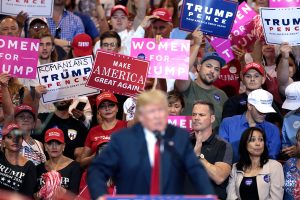
    Donald Trump
    Republican presidential candidate Donald Trump gives a speech in Phoenix, Arizona, October 29, 2016 (Gage Skidmore)

    Donald Trump campaign people are going to jail.

    This isn’t quite the fall of the Trumpian house of cards. Paul Manafort’s indictment is very specific to him and his work in Ukraine. More information must come out before we can be certain this will lead to the White House. While the revelations of George Papadopoulos create the strongest link yet, they have not produced an indictment to date.

    Yet there is an essential tale here: for the first time in modern American history, a foreign power has substantially interfered with a political campaign. It’s not that others haven’t tried. The Soviet Union tried several times to back favored candidates, especially in the turbulent 1960s and 70s. But in those Cold War cases, American candidates refused the help.

    This is the first time it looks like someone said yes.

    What changed? (more…)

  • World Won’t Let Catalonia or Kurdistan Come Quietly onto the Map

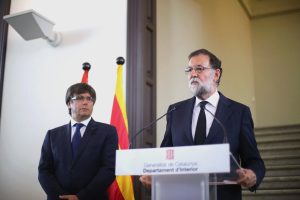
    Carles Puigdemont Mariano Rajoy
    Catalan president Carles Puigdemont listens to Spanish prime minister Mariano Rajoy giving a speech in Barcelona, August 18 (La Moncloa)

    Catalonia and Kurdistan couldn’t seem farther away. One is nestled in the peace and prosperity of Western Europe, the other swims in the chaos of a dissolving Middle East.

    Yet the two independence referendums of these would-be nation states are revealing. Both raise questions about the meaning of their regional orders and have provoked pushback from the status-quo world. (more…)

  • The Many Scenarios of a Republican Civil War

    Texans Republican National Convention Saint Paul Minnesota
    Members of the Texas delegation listen to a speech at the Republican National Convention in Saint Paul, Minnesota, September 2, 2008 (PBS/Tom LeGro)

    In August 2016, I was penning an article titled “The Coming Republican Civil War”. The premise was simple: after a self-inflicted Trumpian defeat in November, the party of Lincoln would tear itself asunder assigning blame and shedding factions.

    But Hillary lost. For a few brief months, the Grand Old Party looked triumphant.

    Not so much anymore.

    The long-term trajectory of the Republican Party isn’t great; factional infighting has already sunk several attempts to roll back the Affordable Care Act and by the end of the month we’ll know just how deep the divides go should tax reform and the Graham-Cassidy health-care bill fail. (more…)

  • Saudi Arabia Tries the Waters of Retrenchment

    In 2015, Saudi Arabia’s new minister of defense, Mohammad bin Salman, sent the kingdom’s armies to Yemen. In 2017, shortly before usurping the position of crown prince, Salman organized a blockade on little Qatar, which had dared defy the kingdom’s geopolitical priorities.

    Both were bold moves fraught with risk. The Yemen war was meant to roll back Iranian influence on the southern border, deny ever-dangerous Al Qaeda a base and prove Saudi Arabia was a capable, independent military power that could fight without mighty America.

    The blockade on Qatar was meant to secure the kingdon’s backyard. Regime-rattling Al Jazeera and the Muslim Brotherhood both enjoyed Qatari state support and, in uncertain times of economic restructuring and inevitable cultural change, having those two wildcards in the mix was not a game the Saudis wanted to play. (more…)

  • So Much for Yet Another Russian Reset

    Saint Basil's Cathedral Moscow Russia
    Saint Basil’s Cathedral in Moscow, Russia at night (Unsplash/Ivan Lapyrin)

    From Reuters:

    US president Donald Trump grudgingly signed into law on Wednesday new sanctions against Russia that Congress had approved overwhelmingly last week, criticizing the legislation as having “clearly unconstitutional” elements.

    Ever since the United States entered the stage as a world power, it’s brushed up against Russia. From the 1918-20 international intervention that halfheartedly tried to prevent the rise of Soviet communism to this latest American sanctions bill, the US has long hoped to turn Russia into yet another reliable ally, joined together in a liberal order of peace and prosperity.

    That geopolitical naivety is deeply embedded in the American body politic: candidate after candidate has hoped to defang the Russian bear with arms outreached, only to discover that Moscow sees not friendship but subjugation.

    It is a relationship between an idealistic, extremely safe nation state and a cynical, deeply insecure one. One finds every betrayal or turnabout shocking; the other sees them as a natural course of events. (more…)

  • Venezuela Is a Geopolitical Tinderbox

    Surges of protests against a deeply unpopular government have catapulted Venezuela from back-burner regional crisis to a hemispheric one. It’s only a Russian presidential visit away from becoming the world’s next geopolitical hot spot.

    Medical supplies are running short, opposition leaders are calling for nationwide boycotts and now the Americans are rousing themselves to begin a sanctions regime against the beleaguered Maduro government.

    It’s quite the fall from grace. From 2004 until 2013, Venezuela’s economy rocketed upward, bringing a measure of prosperity to a country long accustomed to hardship. It appeared, in those heady days, that Hugo Chávez, the country’s authoritarian ruler, could bring about his socialist Bolivarian Revolution and economic prosperity. For the Latin American left, Venezuela was proof that one did not have to conform to the neoliberal capitalism of the United States to be successful.

    Alas, since 2013, the economy has slid further and further while inflation has hammered the country’s currency to the point of worthlessness.

    With America now poking its nose directly into Venezuelan affairs, with the opposition building a shadow government and with the Russians trying to shore up Nicolás Maduro’s government through increasingly generous aid shipments, the country has all the ingredients of a major geopolitical crisis.

    The Americans could find themselves sucked into an ever-expanding role in managing the Maduro regime; the opposition could give up on peaceful politics altogether and embark on an armed struggle; an opportunistic Vladimir Putin might wedge Russian power into South America in hopes of throwing the Americans off balance in Europe. (more…)

  • To Save Saudi Arabia, They Needed a Young King

    By most metrics, the Kingdom of Saudi Arabia is running out of time. It’s finding it impossible to balance its budget after trying to wage a failed price war on shale oil. It is lurching toward a knowledge economy but hoping that knowledge does not bring a demand for political freedom along the way. Its economic model has hit a dead end. A housing crisis coupled with high, nearly permanent unemployment is dragging down the competitiveness of the kingdom.

    Plus there’s the surging power of Iran, the madness of the Sunni supremacists in the Islamic State and Al Qaeda and the quite probable retrenchment of the Americans away from their old alliances in the Middle East.

    To be a Saudi leader is to look into the future and despair.

    Yet doomsday is not certain. In other places, great kings have overcome the burdens of geopolitics by force of will and shrewd wisdom. Peter the Great of Russia force-marched his empire into modernity, bestowing a powerful polity for his successors. Emperor Constantine cobbled together a Roman Empire from the fragments of a century of civil discord. Fredrick the Great managed to guide Prussia from a minor German state to the spine that would eventually unite the whole country after his death.

    They all had one thing in common: decades of absolute power. Peter the Great ruled 39 years; Constantine, 31 years; Frederick the Great, 46 years. They had both time and energy to fix the many problems afflicting their domains.

    Now the Saudis are gambling that Mohammad bin Salman, just 31 years old, can do the same for their kingdom. (more…)

  • The Weapons of Saudi’s Siege on Qatar

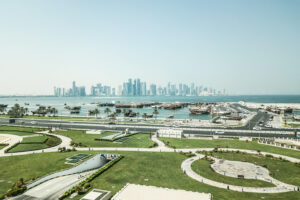
    Doha Qatar
    Skyline of Doha, Qatar (Unsplash/Oleg Illarionov)

    Anyone who’s ever worked in the Gulf isn’t shocked that Qatar missed a deadline. Badiin, badiin, “later, later,” in the local parlance, as yet another meeting fails to happen.

    In light of that, we shouldn’t be so surprised that the Qatar’s been given something of an extension. Reuters reports:

    Four Arab states refrained on Wednesday from slapping further sanctions on Qatar but voiced disappointment at its “negative” response to their demands and said their boycott of the tiny Gulf nation would continue.

    Qatar earlier in the day accused Saudi Arabia, the United Arab Emirates, Bahrain and Egypt of “clear aggression” and said the accusations cited when they severed ties a month ago “were clearly designed to create anti-Qatar sentiment in the West”.

    Western media is conflict-driven and narrative-obsessed: the advent of 24/7 cable news in the 1980s transformed news from the highlights-heavy, factually-driven 5 o’clock stories to the ever-in-crisis outrage industrial complex.

    That’s the result of a free market, free speech and cultural shifts that value action over substance.

    Very little of that translates to the Arabian Gulf, where markets are only free in designated zones and where free speech applies only to those at the very, very top.

    Thus the notion that missing the deadline was a disaster for Mohammad bin Salman of Saudi Arabia and Mohammed bin Zayed of Abu Dhabi is hype. Anti-Saudi conspiracy theorists are grasping at what straws they can if they add up to a haystack of Saudi humiliation.

    Alas, all of that misreads the situation and the Gulf in general. This is a soft-power war: Saudi Arabia and its UAE allies will not risk a military invasion of a country with a United States base inside it. They don’t have to either. For the kingdom and its Gulf Cooperation Council (GCC) lackeys to call it a victory, they need only to wait. (more…)

  • Egypt’s War on Sunni Supremacism Goes to Libya

    From Reuters:

    Egyptian airstrikes destroyed twelve vehicles loaded with arms, ammunition and explosive material trying to cross the border from Libya, the army spokesman said on Tuesday.

    The airforce acted after hearing that “criminal elements” had gathered to try and cross the western boundary, the army statement said, without giving details on exactly where or when the strikes took place.

    Despite the paucity of the initial report, it’s clear the Abdul Fatah al-Sisi is trying to look like he’s getting revenge for attacks on Egyptian Christians by Sunni supremacists, who are trying the same old terror tricks of the 1990s to destabilize the regime. (more…)

  • Meet Mohammad bin Salman, the Last King of Saudi Arabia

    From Reuters:

    Mohammad bin Salman, 31, was appointed crown prince by his father King Salman on Wednesday, replacing his cousin who is 26 years his senior. This made the prince, who already oversaw defense and energy policy, the most powerful figure in the country by some stretch after the octogenarian monarch.

    Already more than a few have mentioned Mohammad bin Salman’s hawkish anti-Iran policies and his bold economic vision. But there’s more to the new crown prince of Saudi Arabia than that. He may be dynamic, comparatively worldly and supposedly forward-thinking, but the odds are we just met the last king of Saudi Arabia. (more…)

  • The Culture Wars Are Ending. Here’s What’s On the Other Side

    Columbus Circle New York
    Columbus Circle in Manhattan, New York at night, December 15, 2007 (Thomas Hawk)

    In 1967, Timothy Leary told the Human Be-In of San Francisco’s Gate Park to “Turn on, tune in, drop out.” It was a high point for counterculturalism, a crescendo of anti-establishment, anti-centrism that exploded into antiwar protests, race riots, civil rights marches and an definitive end of America’s 1950s cultural high.

    It wasn’t the beginning of the twentieth’s century’s culture wars, but it was the point by which it was impossible to ignore they were ongoing. They first stirred somewhere in the 1950s in the backrooms of Beatnik poetry slams and the road warrioring of juvenile delinquents as postwar youth experimented with the edges of their humanity in the safety of a democratic superpower’s economic boom. (more…)

  • Quit Talking About World War III

    American aircraft carrier George Washington
    The American aircraft carrier USS George Washington sails through the Strait of Magellan, November 1, 2015 (USN/Bryan Mai)

    Especially after the downing of a Syrian jet by the Americans.

    It’s in The Sun, on talk radio and, of course, whispered by the “underground” corners of the Internet. Passive monitoring of geopolitical movements have led far too many to conclude the next world war is right around the corner.

    It isn’t. Not that it can’t be, just that it isn’t. At least, not over Syria or North Korea.

    Some of this comes from what Bill Maher on Friday described as “the outrage industrial complex that makes everything that comes along an existential crisis.” It’s the bold words on CNN, ever starker, ever bigger, that come with what turn out to be inconsequential strikes on a Syrian airfield. It’s Fox News publishing poorly-reasoned open letters from country music singers to Barack Obama. Media on both right and left find avid viewers whenever “World War III” is part of their search engine optimization.

    There are a few common presumptions that lead to this kind of talk.

    First, there is a widespread belief that a world war could be accidental, a Cold War leftover partially informed by an incomplete understanding of World War I.

    Second, many think that media hype equals geopolitical importance and so when media outlets blare that Donald Trump has just attacked a Russian ally, we’re all expected to duck and cover while keeping our eyes trained on the very media outlets who demand our 24/7 viewership. Yet the United States government does not formulate policy, nor behave militarily, based on the size of a headline font.

    Let’s get to it. (more…)

  • Does the British Election Mean Anything for America?

    Theresa May Donald Trump
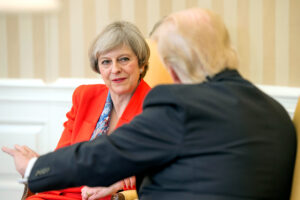
    British prime minister Theresa May speaks with American president Donald Trump the Oval Office of the White House in Washington DC, January 27 (10 Downing Street/Jay Allen)

    As always, yes and no.

    Yes, because the ideology of austerity-driven neoliberalism, that which is championed by Theresa May’s suddenly flailing government, is a major component of the ruling Republican Party in the United States. It’s what Paul Ryan, the speaker of the House, believes in: cuts to public services to benefit the private market.

    Yes, because Brexit, the alt-right-driven anti-immigrant, anti-globalization geopolitical self-harm project is propelled by the same forces that elected the current head of the Republican Party, Donald Trump.

    But also no.

    No, because the United States has a monotonous two-party system. (Britain essentially does too, but the Liberal Democrats can and have emerged as a powerful enough force to tip the balance, as they did in 2010.)

    No, because the United States can’t call snap elections and so the mood today is certainly not going to be the mood of fall 2018.

    No as well, because America does not face a credible secessionist threat, as the United Kingdom does in Scotland, nor is the United States able to do anything close to the self-harm of Brexit.

    With that said, there’s a few lessons worth looking into. (more…)