
Author: Ryan Bohl

  • Balkans Could Fall Victim to Putin-Trump Deal

    Belgrade Serbia
    Skyline of Belgrade, Serbia, August 22, 2011 (Serzhile)

    Rumors of war abound. The simmering conflict of the Balkans may well grow to war again.

    So go the whispers from Bosnia, Kosovo and Serbia. From Reuters to the The Globe and Mail, reports of war-like rhetoric between Kosovo and Serbia have emerged. (more…)

  • Romania Rising: Populism by Different Means

    The tale of 2016-17 has been of anti-neoliberal populists hijacking great parties and great states, forcing policy change down the throats of elites who believed they had arrived at a permanent consensus. They have largely been the harbinger of an uglier form of politics, giving breath to nationalists, racists and irrational bigotry that are a strain on the powers of their states.

    Romania is not immune to the winds of populism. But unlike the rest of the European Union, here the rising is by those who are demanding more rational, more efficient government. It is still populism, but without the ugliness.

    Since February 1, Romanians have been braving frigid winter temperatures to call for the resignation of their two-months old government. For their new government is up to the tricks of their old one and for many Romanians that is a bridge too far. (more…)

  • Dubai, Singapore and the Future of Neoliberalism

    Dubai United Arab Emirates
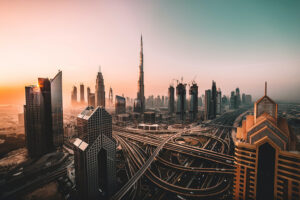
    Downtown Dubai seen from the Burj Khalifa (Unsplash/David Rodrigo)

    It is the little things, they say, that count. The small places can tell us big things.

    There are no smaller places than city states. Holdovers of bygone eras, they are quite nearly the oldest form of political organization our species has. Only tribalism is older and city states arose from settled tribes that over generations grew into legendary places like Ur, Jericho, Athens, the Yellow River city of Cai and the Indus Valley site of Harappa.

    We have no empires left; a few kingdoms, though they keep dropping off the map. Nobody much minds. Yet if we were to lose our city states or our microstates, it would represent a collapse of the international order as we know it. Despite their tiny size, city states are bellwethers of their time. (more…)

  • Don’t Look Now, But West Africa Just Took a Huge Leap Forward

    “West Africa” should really only be a geographical label, not a geopolitical one. It is a place riddled with ethnicities overlapping tribes cut by religion bisected by language. There is nothing simple about West Africa except in the minds of long-dead imperial geographers.

    That hasn’t stopped Nigeria from deciding to reorder the whole region to its liking. But for once in geopolitics, this reordering has not only been largely successful but is also incrementally pushing West Africa to better governance and stronger states.

    And Abuja just had a stunning success in the Gambia, a tiny river-republic that just tried and failed to hold onto the bad old ways of West African politics. (more…)

  • Erdoğan’s Blowback: How Personal Ambitions Plunged Turkey into Crisis

    Recep Erdoğan has come a long way. The president of Turkey, Erdoğan has been clawing upward since becoming mayor of Istanbul in 1994. His political road has been riddled with mines: Turkish generals, side-switching Islamist allies, Kurdish politicians and secular-minded Turks. His accomplishments are impressive. Serving as prime minister from 2003 until 2014, he shepherded real democracy into what was once a military-dominated republic.

    But all great movements run out of steam. Erdoğan’s political shakeup of Turkey is starting to ossify into authoritarian thuggery and habits meant to be banished by democracy.

    Worse, his policies are getting Turkish citizens killed. (more…)

  • Trump’s No Good, Very Bad, Absolutely Stupid Comments on the EU and NATO

    Donald Trump
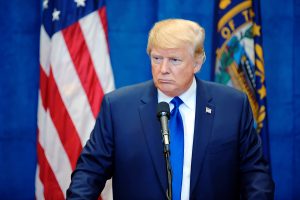
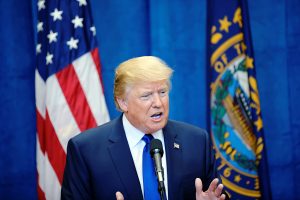
    Donald Trump gives a speech in Derry, New Hampshire, August 19, 2015 (Michael Vadon)

    NATO is “obsolete”. The European Union will, and perhaps should, lose more members.

    Such are the words of the president-elect of the United States and they are unequivocally terrible.

    When Trump slams NATO, he is quietly whispering to deadened nightmares Europe thought it had laid to rest.

    When he hopes for the EU to dissolve, he is literally trying to roll back civilization.

    That’s not hyperbole. Here’s why. (more…)

  • The B+ Presidency of Barack Obama

    Barack Obama
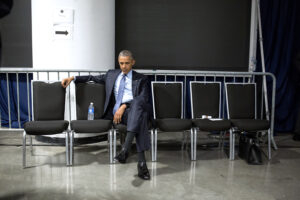
    American president Barack Obama waits backstage before participating in a panel discussion in Atlanta, Georgia, March 29, 2016 (White House/Pete Souza)

    The faded signs of “Hope and Change” still linger in the attics and closets of millions of Americans. I still have my old campaign t-shirt; I worked the phone bank in 2008 in Arizona, where ubiquitous caller ID screens let people decide if they were going to thank me or shout at me before they even picked up. “We ain’t no Democrats,” declared one woman, in what sounded like all caps.

    A presidency whose base was inspired by a spiritual approach to politics, whose spiritualism promised a complete 180 from George W. Bush’s bloody wars and backward cultural practices, and who seemed transformational at the time, can be subject to exaggeration and projection. All Americans of age have a story about Barack Obama: he is the 9/11 of our political landscape, a seminal change that both changed so much and yet changed so little.

    Evaluating Obama as a geopolitical leader demands a strict litmus test, though. How much did his presidency secure his nation state? How much did he stabilize it?

    At the end, Obama was less of a transformation geopolitically than a transition: an essential step onto something else not yet realized. (more…)

  • The Russo-Trump Alliance

    Viktor Orbán Vladimir Putin
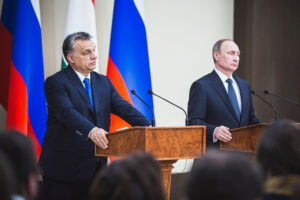
    Hungarian prime minister Viktor Orbán and Russian president Vladimir Putin answer questions from reporters in Moscow, February 17, 2016 (Facebook/Viktor Orbán)

    The Russian hacking scandal of the Democratic National Party continues; accusations that incoming President-elect Donald Trump is a Russian stooge are as steady as the drumbeat of yesteryear’s cries that Barack Obama was not really a citizen. The evidence behind the attack is still thin. Yet it is also irrelevant because it seems the incoming administration has concluded that an alliance with Moscow is just what America’s geopolitical doctor has ordered.

    A Russo-Trump alliance is in the offing and it does make a lot of sense in the short term.

    Alas for the international system, and for the United States, it’s a deal with the devil that will exact ever-higher tolls the longer it goes on. (more…)

  • 2016 in Geopolitical Review

    Barack Obama
    American president Barack Obama waits backstage before participating in a panel discussion in Atlanta, Georgia, March 29 (White House/Pete Souza)

    You’d be hard pressed to find someone who liked 2016. Just about every safe assumption about the future was challenged. To top the year off, the United States even abstained from a veto on the UN Security Council condemning Israeli settlements, rewriting at the last moment the relationship between Washington and Tel Aviv. It has been a roller coaster, but what has it all meant? (more…)

  • Andrei G. Karlov Is Not Franz Ferdinand

    The high-profile killing was everything one could want from a public assassination. Cameras were live; the Western media, less prone to state censorship, watching. The assassin even had a chance to deliver a short speech that was straight to the point and then was promptly killed by Turkish security services. From the standpoint of political murder, it ticked all the boxes.

    It goes to show that humanity has made a good leap forward in education that #FranzFerdinand briefly trended on Twitter. That people knew of the long-dead archduke, and knew his killing touched off World War I, is a testament that maybe teachers are doing a good job after all.

    Well, a decent job. Because the killing of Ambassador Andrei Karlov is a blip, not a world-shaking event.

    There’s a very good reason for it: Russia needs Turkey more than Turkey needs Russia. Even if Vladimir Putin’s own mother was killed in Ankara by a similar rogue agent, Moscow would still very likely not go to war with Turkey.

    That’s because Franz Ferdinand tripped a geopolitical bomb waiting to go off. There is no such bomb between Turkey and Russia. (more…)

  • Aleppo Has Fallen. Now What?

    I am waiting to die or be captured.

    That is the farewell message of one of the handful of remaining anti-Assad activists in Aleppo. As the Assad regime now triumphs a murderous, four-year-long victory, the question of what comes next must be asked.

    Syria is a ruined country. It was a state imposed upon a land not yet a nation and while that state had made progress in building a Syrian nation over the past forty years under the Assad family, at the end of the day the corruption and incompetence of the regime coalesced into an uprising that almost immediately became a civil war.

    As early as the summer of 2013, a year into the battle of Aleppo, Bashar al-Assad’s regime had concluded they would have to create a wilderness to manufacture peace. This they have done in several places, emptying out whole villages and neighborhoods and helping create the world’s largest postwar refugee crisis.

    Under the barrage of relentless bombing, Russian and barrel, Aleppo, the symbol of the rebellion, has collapsed.

    So now what? (more…)

  • Why Taiwan Could (Still) Start World War III

    American Japanese fighter jets
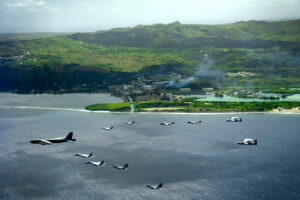
    An American B-52 Stratofortress bomber leads a formation of American and Japanese fighter jets over Guam, February 21, 2011 (USAF/Angelita M. Lawrence)

    Surely you know already the tripwire: Taiwan is a de facto country but a de jure province of mainland China. The people’s republic wants to bring it back under mainland China’s rule while the people of Taiwan want exactly the opposite.

    Moreover, Taiwan’s military security is guaranteed by the United States via the Taiwan Relations Act of 1979, which stipulates the United States must respond militarily to a communist invasion.

    So if the PRC tries to bring Taiwan back into the fold by military force, the United States must retaliate. Conventional battles turn to nuclear battles and then we all die in the irradiated glow of our own monstrous weapons. (more…)

  • The Rational Person’s Guide to Fidel Castro

    There are few leaders who inspire the kind of irrational passion that surrounds the recently-deceased Fidel Castro. He is a hero and a villain and to have an opinion on him so often forces you to choose between the two.

    But there is another way to judge leadership. To understand Castro’s true historical legacy, we should think of him geopolitically.

    That means setting aside moral judgements, which rely on evidence that’s so readily cherrypicked, and pushing past propaganda to look not on Castro’s intentions or his personality but his geopolitical outcomes.

    All leaders who are judged in such a manner must therefore pass a basic question: How much did they secure their nations and/or states and for how long can their methods work?

    Security, of course, should break down as both physical security from invasion and rebellion as well as economic and social security from recessions, poverty and unrest. We are asking, in essence, about how well a leader used their ever-limited power to strengthen their nation state.

    Such strengthening goes beyond mere morality, because murder is murder and always wrong in the eyes of the ethicist. But to murder someone who might corrupt or weaken a nation state is wise geopolitical policy. After all, it’s hard to argue that murdering Adolf Hitler in 1931 would have weakened Germany. (more…)

  • The Middle East in the Age of Trump

    Donald Trump
    Donald Trump gives a speech in Derry, New Hampshire, August 19, 2015 (Michael Vadon)

    We should, of course, discount rumors that Trump will be deposed before even taking office on account of hacked voting machines; until evidence of that becomes clear, we must carry on the discussion of what the new president-elect will do with humanity’s most powerful nation state.

    Nowhere will this be more apparent than in the Middle East, long the recipient of a disproportionate amount of American hard and soft power. I say “disproportionate” because America has, especially since the Cold War, spent a ridiculous amount of power trying to reorder the region as though it were Europe in 1950.

    The Middle East is important: for energy, for security from terrorism, for trade routes and for the lingering worry that one day a pan-Islamic political force will emerge capable of threatening the West, as the Ottoman Turks once did. But despite those goals, America has managed its interests there rather badly: first by oversupporting Israel, then by invading Iraq. Only in its relationships with the Gulf Arabs, Jordan and Egypt has America remained consistently rational, albeit utterly amoral.

    Yet that consistency may give way and we should consider that. (more…)

  • The Geopolitics of President-Elect Donald Trump

    Donald Trump
    Donald Trump gives a speech in Derry, New Hampshire, August 19, 2015 (Michael Vadon)

    What, exactly, does President-elect Donald J. Trump believe?

    From 1987 until 1999, he was a Republican. That year, he changed to the nearly-defunct Reform Party, an obscure New York City legacy party. He then became a Democrat from 2001 until 2008, when he switched back to the Republicans again.

    Meanwhile, simply in the past week, he’s walked back from several campaign pledges, including his promise to deport many millions of immigrants and wholly repeal the Affordable Care Act, or Obamacare as it’s so often known.

    And yet it matters much less than the 24/7 news cycle implies. President-elect Trump is not the be-all, end-all of the United States of America. He, as Barack Obama before him and George W. Bush before him, must play by the rules. (more…)