Author: Ainslie Noble

  • Macron Promises Corsica Autonomy After Violent Protests

    Calvi Corsica
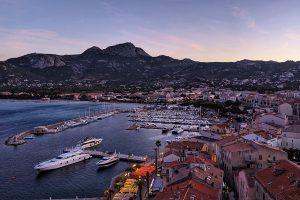
    Night falls on the harbor of Calvi, Corsica, October 15, 2019 (Unsplash/Hannah Wright)

    Corsica was rocked by violent protests this month after Yvan Colonna, a Corsican nationalist, was attacked in a French prison by a fellow inmate. Colonna died of his wounds on Monday.

    He was serving a life sentence in Arles, a small city west of Marseilles, for the murder of Claude Érignac, Corsica’s top regional official in 1998. Colonna had petitioned several times to be transferred to a Corsican prison but was denied every time.

    Despite widespread condemnation across Corsican society of Érignac’s murder, Colonna was still viewed by many as a nationalist hero. The fact that he died in a prison in mainland France added insult to injury. As did the fact that he was killed by a convicted jihadist of African descent. Relations between Corsica’s native and immigrant populations have been tense for years. (more…)

  • South Tyroleans Bide Their Time

    Bolzano Italy
    View of the mountains of South Tyrol from Bolzano, Italy (Unsplash/Gian Luca Pilia)

    An Austrian proposal to extend dual citizenship to German-speaking inhabitants of South Tyrol has heightened already tense relations with Italy over the region.

    However, secession — in the wake of failed independence bids in Catalonia and Scotland — remains unlikely. (more…)

  • Corsica Is Not the Next Catalonia

    Bonifacio Corsica France
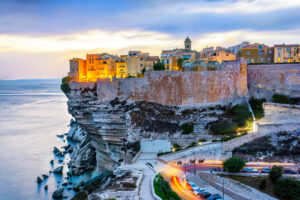
    Citadel of Bonifacio in Corsica, France (Unsplash/Hendrik Cornelissen)

    Earlier this month, a nationalist coalition called Pè a Corsica (For Corsica) won control of the island’s regional assembly with 56.5 percent of the votes.

    Pè a Corsica‘s success may certainly entail more bargaining power for the island vis-à-vis a staunchly centralist French government and it represents yet another European region seeking to forge its own path away from a dominant nation state.

    But it is unlikely to lead to a Catalonia-style rebellion. (more…)

  • Independence Sentiment Aroused in French Catalonia

    Perpignan France
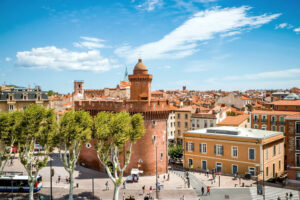
    Perpignan, France, formerly the capital of Languedoc-Roussilon (Adobe Stock/Gerald Villena)

    Catalonia’s independence referendum has aroused separatist sentiment north of the border, where a Catalan-speaking minority has long been content to live under French rule.

    Northern Catalonia, or Roussillon, has been French since 1659.

    Despite the presence of a small but vocal group of Catalan nationalists and a political party, the Unitat Catalana (UC), most of the region’s inhabitants have no desire to break away.

    But recent events — not just those in Spain — have given French Catalans reason to question the status quo. (more…)

  • Attitudes in Spain’s Basque Country Mirror Those in Catalonia

    Bilbao Spain
    Guggenheim Museum in Bilbao, Spain (Unsplash/Jorge Fernández Salas)

    Attitudes in Spain’s Basque Country have mirrored Catalonia’s surge in separatism.

    When the European Court of Human Rights ruled in 2010 that Spain’s Constitutional Court had been correct in declaring a Basque independence referendum illegal, the region accepted it.

    But when the same Constitutional Court threw out part of Catalonia’s autonomy statute that same year, it galvanized the separatist movement.

    The Catalans are now determined to vote on independence. Opponents fear a domino effect. They worry that, if the Catalans are successful, the Basque Country may push for independence next.

    That seems unlikely. (more…)

  • The Val d’Aran: The Minority Within the Catalan Minority

    The one area of Catalonia where there is remarkably less enthusiasm for independence from Spain lies in its northwest: the Val d’Aran, the only comarca north of the Pyrenees.

    Its population of less than 10,000 speaks Aranese, a form of Gascon, itself a variety grouped (though not without controversy) under the rubric of Occitan, a Romance language once spoken in the south of France.

    In France, these “varieties” (a term I use for the sake of neutrality) of Occitan, such as Gascon, Provençal and Limousin, have been relegated to folkloric remnants harking back to the Troubadours. They are subject to token efforts, such as bilingual signage and partially subsidized school instructions, but are derisively considered patois dialects or, worse still, bastardized versions of French.

    In Catalonia, however, Aranese enjoys co-official status alongside Catalan and Spanish. (more…)