Author: Nick Ottens

  • How the Left Lost the Italian Election

    Enrico Letta
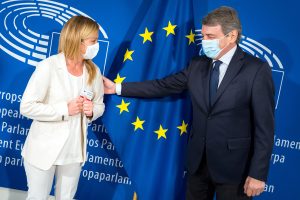
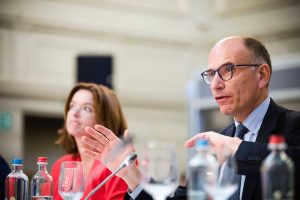
    Italian Democratic Party leader Enrico Letta meets with other European socialists in Brussels, June 23 (PES)

    The votes have been counted in 61,400 polling stations and they confirm what the exit poll told us on Sunday night: Italy has lurched to the right.

    But not by much.

    The four right-parties have 44 percent of the votes. That’s up from 37 percent in 2018, but closer to their historical average.

    The right has become more right-wing. The Brothers of Italy, whose support went up from 4 to 26 percent, didn’t win many new voters; they cannibalized Matteo Salvini’s (formerly Northern) League, which has been reduced to a party of Po Valley homeowners and businessmen who despise the Italy south of the Arno River. Giorgia Meloni would lead Italy’s first right-wing government since Silvio Berlusconi stepped down in 2011, and the most right-wing government since the end of World War II.

    The south, including Sardinia and Sicily, has about a third of the Italian population but not even one-fifth of its industrial base. It stuck with the Five Star Movement, the party of the left-behind Italy.

    Ideologically and geographically, the social democrats are fighting a war on two fronts from their strongholds in Emilia-Romagna (the region around Bologna) and Tuscany (Florence). They did reasonably well in neighboring Liguria, Marche and Umbria, but there was a time when the left could count on working-class support from the south of the peninsula.

    The defection of former party leader Matteo Renzi, and his union with the once-marginal liberals, which got 8 percent, also weakened the Democrats from within. (more…)

  • Right-Wing Parties Win Italian Election. Turnout Lowest in 100 Years

    • Right-wing parties won the election in Italy on Sunday.
    • Giorgia Meloni, the leader of the largest right-wing party, Brothers of Italy, would become the country’s first woman prime minister.
    • She would lead the first right-wing government since Silvio Berlusconi stepped down in 2011, and the most right-wing government since the end of World War II.
    • The elections were called when Prime Minister Mario Draghi lost the confidence of parliament in July. He did not run for reelection.
    • All 400 seats in the Chamber of Deputies and 200 elected seats in the Senate were contested.
    • Turnout, at 64 percent, was the lowest since Benito Mussolini rigged the election of 1924. (more…)
  • Become a Paying Subscriber to Support My Journalism

    I’ve switched on paid subscriptions to the Atlantic Sentinel newsletter on Substack to give readers a chance to support my journalism.

    Before I tell you about the how and what you can expect in return, let me tell you why.

    When I left XPRIZE at the end of January, I decided to focus full-time on my political and writing interests. I got involved in Liberal Green, which is a network in my political party that advocates for green growth, and joined their Food Team. We’re working on cultivated meat and future business models for farmers, which are issues I (will) write about too. I got a part-time gig with Wynia’s Week, which is a right-leaning internet magazine in the Netherlands, that — in addition to opinion writing — allows me to do investigative journalism about topics like asylum law, energy subsidies and taxes, housing policy and the shortage of nurses in Dutch hospitals. In English, I wrote about Emmanuel Macron’s reelection, Pedro Sánchez’ snubbing of Catalans and the Dutch farmers’ protests for EUobserver and World Politics Review. And, of course, I’ve kept publishing here.

    I’ve been writing fewer, but more thoroughly researched stories, with a focus on the countries I know best: the Netherlands, Spain and the United States (where I lived); France (not just because I’m a Macron fan!); and occasionally Italy. That’s what I want to continue to do. With an income from Atlantic Sentinel, supplanted by freelance work, I can write about the topics I care about. (more…)

  • Italian Election Guide

    Italian parliament Rome
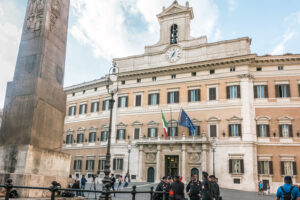
    Palazzo Montecitorio, seat of the Italian parliament, in Rome (Shutterstock)

    Italians vote in early elections on September 25. All 400 seats in the Chamber of Deputies and 200 elected seats in the Senate will be contested.

    The elections were called after Prime Minister Mario Draghi lost the confidence of the populist and right-wing parties in his coalition. Polls predict a victory for the right.

    Here is everything you need to know. (more…)

  • Dutch Government to Cap Energy Prices

    Sigrid Kaag
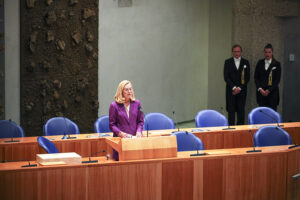
    Dutch finance minister Sigrid Kaag presents her 2023 budget to parliament in The Hague, September 20 (Ministerie van Financiën/Valerie Kuypers)

    The Dutch government will cap electricity and gas prices.

    King Willem-Alexander announced the measures, which replace an energy tax discount, during the state opening of parliament in The Hague.

    The Netherlands until recently opposed price caps in Europe, arguing they disincentivize energy conservation.

    Lower fuel taxes will remain in place until the middle of next year. (more…)

  • Catalan Separatists March, But Are Divided

    Barcelona Spain demonstration
    Catalans demonstrate for independence in Barcelona, Spain, October 14, 2018 (Unsplash/Külli Kittus)

    Hundreds of thousands of separatists streamed into Barcelona on Sunday. A mass of red, yellow and blue — the colors of Catalan independence — filled the boulevard along the city’s old seaport before crowding Ciutadella Park, where the regional parliament is located.

    Organizers claimed 700,000 Catalans attended this year’s National Day rally. Barcelona police put the figure at 150,000, which would make attendance by far the lowest since demonstrations began in 2010. El Nacional, a pro-independence outlet, argues the low estimate isn’t credible, but 700,000 seems high given this year’s shorter route.

    Whatever the number, it’s clear the separatist movement has peaked. As many as one million (on a population of 7.7 million) demonstrated for independence as recently as 2018.

    The failed breakaway of 2017, that year’s suspension of Catalan autonomy and the prosecution of Catalan leaders (later pardoned) have demotivated many separatists. Polls suggest four in ten Catalans still want their own state. It was close to fifty-fifty in 2019. (Although even then, almost half of independence supporters would have been content with federalizing Spain.) (more…)

  • EU Proposes to Cap Electricity, Russian Gas Prices

    Ursula von der Leyen
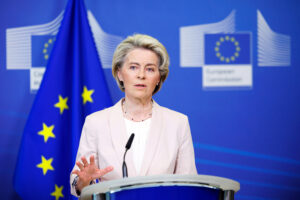
    European Commission president Ursula von der Leyen delivers a news conference in Brussels, July 19 (European Commission/Christophe Licoppe)

    European Commission president Ursula von der Leyen has proposed an unprecedented intervention in European energy markets to bring down electricity and gas prices:

    • Cap the price Europe pays for Russian gas.
    • Cap prices of electricity generated in non-gas plants.
    • Mandate energy conservation during peak hours.
    • Tax windfall profits made by energy companies to finance relief for small businesses and households.

    Russia immediately threatened to cut off all energy supplies if member states agreed to the plan.

    The Netherlands, which led the opposition to a blanket cap on gas prices, could support one for Russian gas.

    The Czech Republic, which holds the rotating presidency of the EU, remains skeptical. Industry minister Jozef Síkela told reporters a council of European energy ministers on Friday would consider only two proposals: delinking electricity and gas prices, and capping electricity generated in non-gas plants. (The second requires the first.) (more…)

  • Don’t Tell Europeans to Cut Down on Meat

    Madrid Spain meat market
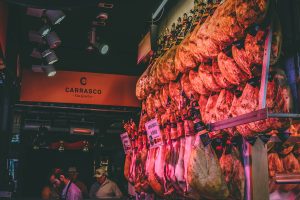
    Meat for sale in the San Miguel Market of Madrid, Spain, August 22, 2017 (Unsplash/Victor)

    Meat eaters can be thin-skinned.

    In the Netherlands, Wakker Dier, an animal-rights charity, discovered that the previous minister of agriculture, Carola Schouten, vetoed the inclusion of eating less meat in a “what you can do to fight climate change” campaign for fear of upsetting carnivores.

    That such fears are not unfounded is borne out by the experiences of politicians in France and Spain. (more…)

  • Dutch Spend €16 Billion to Offset Higher Living Costs

    Mark Rutte
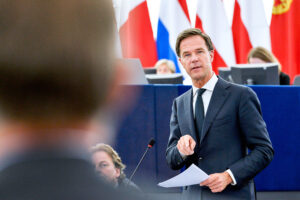
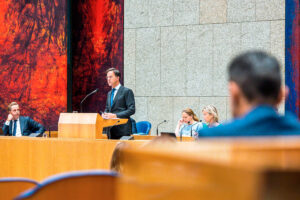
    Dutch prime minister Mark Rutte answers questions from members of the European Parliament in Strasbourg, July 5, 2016 (European Parliament)

    The Dutch government is due to unveil €16 billion in new spending (worth 2 percent of GDP) to help low- and middle-income earners pay record-high energy and grocery bills.

    A package of benefits, tax cuts and tax increases Prime Minister Mark Rutte’s four-party coalition agreed was promptly leaked to various media. They will be officially announced in next year’s budget on September 20.

    The government already spent €6.5 billion this year to lower energy and fuel taxes, and to give low-income households a bonus of €1,300. Those measures would be repeated.

    The Dutch pay the highest electricity and gas prices in Europe, and the highest fuel prices after the Nordic countries and Greece.

    With inflation reaching 13.6 percent in August, a postwar record, and the Netherlands’ Central Bureau of Statistics projecting that 1.2 out of 17.7 million people could fall below the poverty line, Rutte’s coalition was under pressure to do more.

    The policies leaked on Wednesday should give the lowest incomes between €3,000 and €4,000 in support next year.

    Here is an overview, including who’s paying for it. (more…)

  • Europe’s Energy Crisis, Explained

    Eemshaven Netherlands power plant
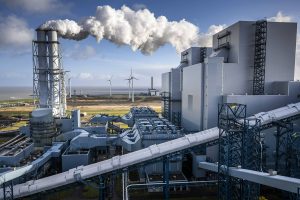
    Coal plant and wind turbines in the Eemshaven of the Netherlands (Kees van de Veen)

    European countries spent €280 billion on subsidies and tax cuts in the last year to help businesses and households pay their energy bills.

    It may not be enough.

    Prices surged when Russia expanded its war in Ukraine in February and European states agreed to reduce their imports of Russian natural gas. The EU as a whole got 40 percent of its gas from Russia in previous years. That is down to 20 percent.

    But there are more factors pushing up electricity and gas prices. Here is an overview, including what governments have done to ameliorate the effects. (more…)

  • Farm Crisis Divides Dutch Government

    Mark Rutte
    Prime Minister Mark Rutte answers questions from Dutch lawmakers in The Hague, September 17, 2020 (Tweede Kamer)

    Farm protests in the Netherlands have divided Prime Minister Mark Rutte’s four-party coalition.

    Foreign minister and deputy prime minister Wopke Hoekstra, who leads the junior Christian Democratic party, told the AD newspaper last week that the government’s ambition to halve nitrogen emissions by 2030 was no longer “sacrosanct”.

    Christianne van der Wal, the minister who designed the targets, and a member of Rutte’s liberal party (of which I am a member too), publicly described Hoekstra’s seeming capitulation to demonstrating farmers as “unpleasant”. Het Parool, the newspaper of Amsterdam, reports she privately called it a “stab in the back.”

    Sigrid Kaag, the finance minister and leader of the left-liberal D66, accused Hoekstra of undermining “trust” between the ruling parties.

    Rutte downplayed the split on Tuesday, arguing Hoekstra had a right to speak his mind as party leader, even if, as a member of the cabinet, he is expected to represent the government’s policy. (more…)

  • European Military Support for Ukraine Dries Up

    Dutch self-propelled howitzer
    Dutch self-propelled Panzerhaubitze 2000 takes part in a military exercise in Sweden, October 2018 (Ministerie van Defensie)

    For the first time since the Russian invasion in February, European countries did not pledge additional weapons to Ukraine in July.

    The German Kiel Institute, which keeps track of countries’ humanitarian as well as military assistance to Ukraine, reports that the United States is providing €25 billion in weapons, in addition to €20 billion in humanitarian and financial support. European countries, including the UK, are giving less than €10 billion in arms.

    Christoph Trebesch, who leads the team in Kiel that compiles the data, calls it “surprisingly little considering what is at stake.” He compares the €10 billion for Ukraine to the €750 billion Europe, excluding the UK, spent to recover from the coronavirus pandemic.

    I have a story in the Netherlands’ Wynia’s Week about Europe’s waning support for Ukraine. I’ll translate the highlights. (more…)

  • Overregulation Makes Child Care More Expensive in DC

    Washington DC
    View of Washington DC with the United States Capitol in the distance, February 17, 2015 (Matt Popovich)

    Child-care workers without a college education will have to give up their profession in Washington DC.

    Regulations that were meant to go into effect in 2020, applying to all daycare centers and some home-based child-care businesses, were challenged by two child-care workers and a parent, but a federal court ruled for the district this week. Reason has the story.

    The two workers, Altagracia Sanchez and Dale Sorcher, have 49 years of child-care experience between them. Both have Bachelor’s degrees — but not in early-childhood education, making them ineligible under DC’s new rules. (more…)

  • What to Expect of Italy’s Next Government

    Giorgia Meloni
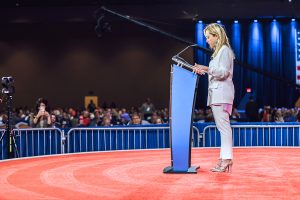
    Brothers of Italy party leader Giorgia Meloni speaks at the Conservative Political Action Conference in Orlando, Florida, February 26, 2022 (Vox España)

    Italy’s next coalition government will likely consist of three right-wing parties: the Brothers of Italy, League and Forza Italia (Forward Italy) are polling at close to 50 percent support, which should be enough to give them control of both chambers of parliament.

    For the first time, the Brothers of Italy, who split from Forza in 2012, would place first and provide the prime minister: Giorgia Meloni.

    The (formerly Northern) League, led by Matteo Salvini, won the election in 2018, but conservatives were disappointed when it formed a government with the left-populist Five Star Movement, and even more disappointed when Salvini left the government in a failed bid to force snap elections.

    Forza has been in third place since their leader, Silvio Berlusconi, lost reelection in 2013.

    The parties have released a joint manifesto for the election in September that is light on detail but nevertheless provides the best clues about what a right-wing government might do. Here are the main points. (more…)

  • Democrats Taxed and Regulated, Now Subsidize, Chips and Energy

    Joe Biden Nancy Pelosi
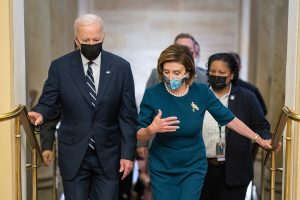
    American president Joe Biden and Democratic House speaker Nancy Pelosi in the Capitol in Washington DC, October 28, 2021 (White House/Adam Schultz)

    Ronald Reagan summarized government’s view of the economy: “If it moves, tax it. If it keeps moving, regulate it. If it stops moving, subsidize it.”

    Economists now call this cost-disease socialism: first restrict supply, then subsidize the costs. The United States does this with everything from health care (examples here) to housing (although Joe Biden’s reforms go in the right direction).

    Democrats are making the same mistake with their technology and climate laws.

    There is plenty to like about the CHIPS and Science Act and the (albeit misleadingly-named) Inflation Reduction Act. The first doubles government funding of research into 6G communications, advanced manufacturing, artificial intelligence and other breakthrough technologies; the latter creates a 15-percent minimum tax on the largest corporations, lowers annual out-of-pocket drug payments for Medicare patients from $7,050 to $2,000 beginning in 2025 and will allow Medicare to negotiate some drug prices starting in 2026.

    But both laws also spend billions of dollars in subsidies and tax credits to prop up technologies and industries that could have been deregulated instead. (more…)