
Author: Nick Ottens

  • Italy Has a Draghi-Sized Problem

    Mario Draghi
    European Central Bank president Mario Draghi walks to a news conference in Frankfurt, October 25, 2018 (ECB/Martin Lamberts)

    Mario Draghi is the best thing to have happened to Italy in many years — and a symptom of its political weakness.

    The former European Central Bank chief, who became prime minister a year ago, has the stature to implement difficult but long-overdue reforms in everything from digitalization to labor law. He has the support of all political parties except the far right. They can hide behind Draghi, and Draghi’s authority, when the reforms inevitably hurt vested interests.

    If Draghi steps down, the whole thing could collapse. Left, right and anti-establishment parties could once again fall out. A next government could cancel or reverse reforms that affect its voters, which in turn would undermine support for countervailing reforms.

    But if Draghi stays as prime minister until the election in 2023, parties need to find someone else to fill Italy’s largely ceremonial presidency, which has a seven-year mandate.

    The eighty year-old Sergio Mattarella is due to step down in February. His successor must be chosen by a conclave of 321 senators, 630 deputies and 58 regional delegates.

    You would think with so many politicians (Italy has the third-largest parliament in the world after China and the UK), it shouldn’t be too hard to find a replacement. But all eyes are on Draghi again. (more…)

  • Give Joe Biden a Break

    Joe Biden
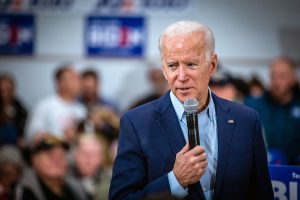
    American president Joe Biden boards a helicopter at Joint Base Andrews, Maryland, October 7, 2021 (White House)

    One year into Joe Biden’s presidency, the media consensus is that he is failing.

    The Financial Times reports that the Democrat is trying to “reboot” his “faltering” presidency. The Washington Post believes he is “stumbling”. The Wall Street Journal calls it “flailing”.

    Foreign journalists agree. Britain’s The Guardian newspaper writes that Biden is historically unpopular and “much of his domestic agenda is stalled on Capitol Hill.” Here in the Netherlands, EW Magazine wonders if anyone is still happy with the president while RTL reports that he has “blundered” abroad and “broken” his election promises. (more…)

  • Pandemic Underscores Need for British Health Reform

    Bristol England hospital
    Royal Bristol Infirmary, England (Fotohaus)

    COVID-19 has overwhelmed all health-care systems, but few were as ill prepared as the British.

    The National Health Service (NHS) has almost 100,000 job openings, including close to 40,000 for nurses.

    The pandemic exacerbated the shortages; because doctors and nurses contracted the virus or quit in exhaustion while demand for health care went up.

    Nonessential procedures were delayed. To clear the backlog, and return to the maximum waiting time of eighteen (!) weeks for treatment, the NHS would need an extra 18,000 nurses on top of the 40,000 it is looking to hire anyway. (more…)

  • EU Is Right to Label Nuclear Power Green

    Olkiluoto Nuclear Power Plant Finland
    Director General Rafael Mariano Grossi of the International Atomic Energy Agency visits the Olkiluoto Nuclear Power Plant in Finland, November 26, 2020 (TVO/Tapani Karjanlahti)

    The European Commission has proposed to label nuclear power “green” in order to meet the bloc’s ambition to reduce greenhouse gas emissions to zero by 2050.

    The EU taxonomy still needs to be approved by the European Parliament and member states, but it seems unlikely they will want to unwind a hard-won compromise.

    Once approved, it should unleash private-sector investment in green industries.

    In a concession to coal-dependent Germany, which is phasing out nuclear power, the taxonomy would also consider natural gas “green” until 2030.

    Ten member states, including Belgium, Finland and France, had argued for including nuclear power. An eleventh, the Netherlands, just announced plans to phase out natural gas and build two more nuclear plants. (more…)

  • Expropriation Unlikely in Berlin, But So Is Cheaper Housing

    Berlin Germany
    Tower blocks in Berlin, Germany, May 3, 2020 (Unsplash/Sebastian Herrmann)

    Berliners voted in September to expropriate apartments from large landlords. 56 percent supported the proposal in a referendum, which would put around 243,000 of the city’s 1.5 million rental apartments in public ownership.

    I argued against expropriation at the time, and have written a follow-up for the Dutch opinion website Wynia’s Week in which I argue the city is unlikely to go through with it. It is a bad proposal, one that is opposed by even the center-left, and it may not stand up in court.

    Unfortunately, that doesn’t mean either the city or the federal government is likely to ease Berlin’s housing shortage. (more…)

  • Dutch Labor Reforms Don’t Address Root Causes of Liberalization

    Amsterdam Netherlands
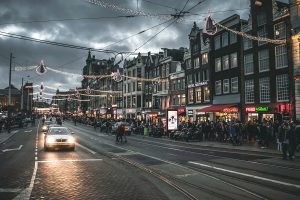
    Night falls on the Damrak in Amsterdam, the Netherlands (Unsplash/Elias Ehmann)

    The Netherlands is finally about to have a new government. Ten months after the elections, and three weeks after parties did a deal, Mark Rutte is due to present his fourth cabinet in a week.

    I’m happy with many of the proposals in the coalition agreement, which I summarized here before Christmas; not surprising, since it’s a coalition of four centrist and center-right parties, led by my own (Rutte’s).

    I am worried about their plans for the labor market, which would raise costs for employers and freelancers in order to discourage abuses of self-employment laws.

    (I also wrote a column on this in Dutch for deZZP.) (more…)

  • “Repeal” of Spanish Labor Reforms Is Limited

    Yolanda Díaz María Jesús Montero José Luis Escrivá
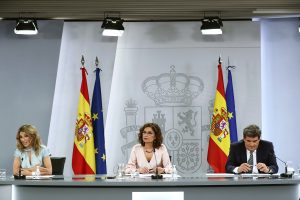
    Spanish labor, finance and social security ministers Yolanda Díaz, María Jesús Montero and José Luis Escrivá give a news conference in Madrid, May 27 (La Moncloa)

    Spanish employers and trade unions have done a deal with Pedro Sánchez’ socialist government to overturn several labor reforms of his conservative predecessor, Mariano Rajoy.

    I argued against repeal. Rajoy’s liberalizations helped bring down unemployment, from a peak of 26 percent to 14 percent before the pandemic, and encouraged business growth. They allowed companies to opt out of collective bargaining agreements and expanded trial periods for employees.

    The reforms did not create more precarious jobs. The share of part-time, temporary and self-employed workers has barely changed in a decade.

    Temp work will nevertheless be restricted. Luckily the rest of Sánchez’ changes are mild. (more…)

  • Top Stories of 2021

    2021 wasn’t all bad. Joe Biden became president of the United States. Israel and Italy got better governments. Spain took a step in the right direction for Catalonia — but a step in the wrong direction on labor policy. Political fragmentation didn’t weaken Germany. The Netherlands scored a little-noticed antitrust victory in Brussels.

    Here are the best Atlantic Sentinel stories of the year. (more…)

  • Struggling Through Simms

    Europe: The Struggle for Supremacy, from 1453 to the Present

    Historians tend to discourage each other from writing sweeping histories. Usually that’s good advice. Few individuals know enough to write “the” history of peasantry or “the” history of the fifteenth century or “the” history of France. Better to devote a few years of your life to writing a thorough history of peasant life in fifteenth-century France than try to be the next Fernand Braudel.

    We still want the best historians to at least make an attempt at grand narrative, or we couldn’t see the forest of history through the microhistory trees.

    Good examples from recent years include John Darwin’s After Tamerlane (2007) and Peter Frankopan The Silk Roads (2015) for inner, and Victor Lieberman’s Strange Parallels (2003, 2009) for coastal, Eurasia, and Jack Goldstone’s Why Europe? (2008) for the rise of the West (far superior to Niall Ferguson’s more popular book on the topic).

    Brendan Simms’ Europe: The Struggle for Supremacy is a lesser entry in the genre. (more…)

  • What’s in the Dutch Coalition Agreement

    Mark Rutte Justin Trudeau
    Canadian prime minister Justin Trudeau speaks with members of the Dutch government in The Hague, October 29 (PMO)

    Prime Minister Mark Rutte’s liberal VVD (of which I am a member) has completed negotiations with the left-liberal D66 and two Christian parties to form his fourth government in the Netherlands.

    At 47 pages, the coalition agreement is short by Dutch standards. In some cases, the parties define the outlines of a compromise but leave it to the next cabinet to fill in the blanks. Rutte has to find nineteen ministers and ten junior ministers.

    Yesterday, I listed the key policies at a high level, which was based on Dutch media reports and the draft of an agreement Christian Union leader Gert-Jan Segers forgot on a train in November. Now that I’ve read the full text, I can give you the details. (more…)

  • The Next Dutch Government, Explained

    Mark Rutte
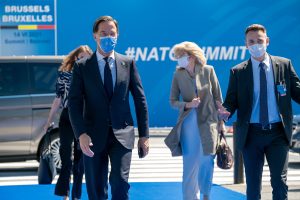
    Dutch prime minister Mark Rutte arrives at NATO headquarters in Brussels, June 14 (NATO)

    Nine months after parliamentary elections, parties in the Netherlands are finally ready to form a government.

    Prime Minister Mark Rutte’s liberal VVD (of which I am a member) has completed negotiations with the left-liberal D66, the Christian democratic CDA and the Christian Union (CU). The same four parties formed his last government.

    At 271 days, this was the longest government formation in postwar Dutch history.

    Why did it take so long? And what’s next? I’ll explain. (more…)

  • How to Keep an Empire for a Thousand Years

    The Holy Roman Empire: A Thousand Years of Europe's History

    Keeping a thousand years of European history readable is no small feat, but Peter H. Wilson manages it.

    The Holy Roman Empire touches on everything from high politics to peasant life. Wilson’s central insight: the empire’s perceived weaknesses were its strengths.

    The Holy Roman Empire changed composition through the centuries. Its internal organization was in a constant state of flux. Emperors had to negotiate to come to power and compromise to stay in power. Autonomy given to one city or prince did not necessarily apply to another. For a long time, such agreements were not even written down. The empire refused to lay down one law, one language, one religion. It ended up a patchwork of overlapping competencies and jurisdictions that kept bureaucrats, lawyers and politicians busy for centuries. (more…)

  • Don’t Fall for Putin’s Propaganda About Ukraine

    Vladimir Putin
    Russian president Vladimir Putin listens during a meeting in Voronezh, August 5, 2014 (Kremlin)

    With Russia possibly on the verge of escalating the Donbas War, it’s worth repudiating Vladimir Putin’s justifications for invading Ukraine.

    This summer, Putin explained at length why he believes Russia and Ukraine are inseparable. His is a selective version of history that is illuminating insofar as it reveals Russian attitudes toward Belarusians, Ukrainians and other Slavic peoples in Eastern Europe; it’s not an excuse for denying Ukrainians their right to self-determination. (more…)

  • Spain Tries to Attract More Expats

    Barcelona Spain
    Skyline of Barcelona, Spain (Unsplash/Anastasiia Tarasova)

    Maybe I left Spain too soon. The country is trying to lure (back) expats by cutting red tape and taxes.

    Early in the pandemic, expats and tourists stayed away when Spain imposed one of the strictest lockdowns in Europe. For weeks, we weren’t allowed to leave our homes except to do groceries and walk the dog.

    But as restrictions were relaxed, and teleworking became the norm Europe-wide, sunny Spain suddenly looked more attractive to knowledge workers in Northern Europe. Tens of thousands made the trek south.

    Pedro Sánchez wants them to stay. (more…)

  • Two Visions of France

    Paris France
    Skyline of Paris, France, May 27, 2020 (Unsplash/Nicolas Jehly)

    Two videos, two visions of France.

    The first kicks off Éric Zemmour’s presidential campaign. (Version with English subtitles here.) It’s a France where gangs of dark-skinned men rob elderly women and liberal elites call true patriots racists and xenophobes.

    The second comes from the Elysée Palace and celebrates the “pantheonization” of American-born singer and French Resistance fighter Josephine Baker. It appeals to the best of France: brave, cultured, multiethnic, republican. It’s a vision Emmanuel Macron will want to make his own. (more…)