Author: Nick Ottens

  • Recommended Reading on the Russo-Ukrainian War

    Russia’s invasion of Ukraine has entered its fourth week. Russian forces have made limited headway, according to Western assessments. Russia has failed to take major Ukrainian cities and is instead shelling them from a distance, causing enormous destruction to property and unknown casualties.

    In Mariupol alone, which has been surrounded by Russians attacking from Crimea in the west and the Russian puppet republic of Donetsk in the north, officials report 2,500 dead.

    More than three million Ukrainians, out of 44 million, have left the country, according to the UN. Almost two million fled to Poland.

    Chernihiv, close to the border with Belarus, has been without electricity, heat and water for almost three weeks. Suburbs of Kiev were cut off from heat and water this week.

    Russian forces have progressed farthest in the agricultural Kherson Oblast in the south, reaching the east bank of the Dnieper River that cuts Ukraine in half.

    Here are the most insightful takes on the war I’ve read this week. Click here for my previous recommendations. (more…)

  • Dutch Ignored Warnings About Relying on Russian Gas

    The Hague Netherlands
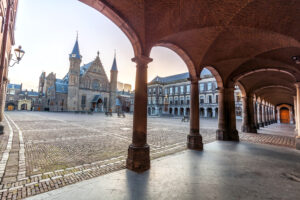
    Dutch government offices and parliament buildings in The Hague (iStock/Fotolupa)

    Germany is primarily to blame for Europe’s dependence on Russian gas. As I wrote here two weeks ago, it simultaneously phased out coal and nuclear, couldn’t possibly replace both with renewables, relied on natural gas and hid behind the excuse that buying gas from Russia was just business. If there were political implications at all, successive German governments argued they would be positive. Trading with the Soviet Union had paved the way for détente, and at the time Americans had also opposed Ostpolitik. Why listen to them now?

    But this time the Americans were right. And Eastern Europeans. And the many Western experts who tried to warn their governments that they were relying on an unreliable regime and funding Vladimir Putin’s war machine.

    My country is no exception. When I was doing research for Wynia’s Week about Gazprom’s sprawling business interests in the Netherlands, I discovered that the Dutch government had been repeatedly warned through the years against relying on Russian gas imports.

    Hubert Smeets, the co-founder of Raam op Rusland, which publishes in Dutch and English, told me the Netherlands should have looked for alternatives to Russian gas, especially after the annexation of Crimea and the downing of Malaysia Airlines Flight 17 in which 193 Dutch nationals were killed. “It is unbelievable that the opposite happened under Prime Minister Mark Rutte.”

    Only now that Russia has dramatically escalated its war in Ukraine do most Dutch political parties want to stop buying Russian gas. (And are they willing to raise defense spending.)

    They should have paid more attention in the past. The warning signs were there. (more…)

  • Germany Admits Failure of Ostpolitik 2.0

    Olaf Scholz
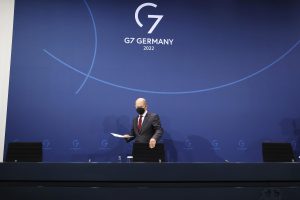
    German chancellor Olaf Scholz sits down to give a news conference in Berlin, February 16 (Bundesregierung/Johannssen-Koppitz)

    The Financial Times reports that German businesses are steeling themselves to sever links with Russia.

    The German government is raising defense spending to €100 billion this year, meeting NATO’s 2-percent norm for the first time in thirty years and giving Germany a larger military budget than Russia. It is buying fifty new warplanes, including the F-35 Joint Strike Fighter.

    The government also supports the European Commission’s proposals to make the EU less dependent on Russian oil and gas.

    I’m the glass-half-full type, so I want to say better late than never. But Germany really is late in seeing Vladimir Putin for who he is. (more…)

  • Which Countries Still Support Russia, and Why

    Vladimir Putin Jair Bolsonaro
    Presidents Vladimir Putin of Russia and Jair Bolsonaro of Brazil pose for photos in the Planalto Palace in Brasília, November 14, 2019 (Palácio do Planalto/Marcos Corrêa)

    Vladimir Putin has few allies in his war against Ukraine. The democracies of East Asia, Europe and North America are against him, and have imposed unprecedented economic sanctions. Almost the entire rest of the world has condemned the invasion.

    A few countries are reluctant, or have outright refused, to take a stand. I asked the Atlantic Sentinel‘s China, India, Israel and South America experts to explain why. (more…)

  • Why Europe Didn’t Reduce Its Dependence on Russian Gas

    Rotterdam Netherlands port
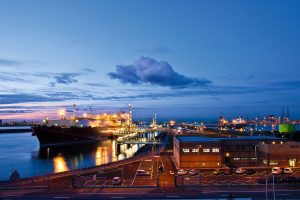
    Liquified natural gas terminal in the port of Rotterdam, the Netherlands (Gasunie)

    Australia, Canada, Europe, Japan and the United States have imposed unprecedented economic sanctions on Russia since it invaded Ukraine, banning Russian airlines and state media, cutting off Russian banks from the SWIFT financial system and freezing the assets of Russian oligarchs and the Russian Central Bank.

    The one step European countries haven’t taken is blocking Russian oil and gas. They can’t.

    Oil and gas account for 60 percent of Russia’s exports and 39 percent of its tax revenues. Cutting off either or both would seriously hamper Vladimir Putin’s ability to make war. But Europe is just as dependent on Russian imports as Russia is on exports.

    This is not a new problem. After Russia annexed the Crimean Peninsula from Ukraine in 2014, the European Commission tried to get member states behind a common energy strategy that would make the EU more self-reliant. Member states prioritized their individual interests.

    1. Eastern Europeans understood the danger of relying on Russia, but refused to invest in green energy, because it was too expensive.
    2. Western Europeans invested more in renewables, but also chose to rely on Russian gas and ignored the risks. (more…)
  • Recommended Reading on the Russo-Ukrainian War

    Vladimir Putin dramatically escalated his war in Ukraine a week ago, attacking the country’s major cities Kharkiv and Kiev and expanding Russian control of Ukraine’s Black Sea coast out of Crimea.

    So far the least successful Russian offensive has been in the Donbas. Possibly because the Ukrainian soldiers there are its most battle-hardened. Or maybe the Russian attack from the breakaway regions of Donetsk and Luhansk was only meant to pin those Ukrainian forces down.

    Russian troops have entered the northern suburbs of Kiev, streaming down from Belarus. Ukrainian president Volodymyr Zelensky and his government remain in the city, once home to three million.

    The United Nations estimates that 660,000 Ukrainians have fled. More than half made their way to Poland. The Polish government says 50,000 Ukrainians are arriving every day. Hungary has taken 90,000 refugees. Hundreds thousands more are internally displaced.

    The European Union has banned Russian flights and state media, and in an historic first is providing €500 million worth of weapons to Ukraine. Large Western companies, including automaker Daimler and the oil and gas giant Shell, are pulling out of Russia.

    I haven’t been writing daily analyses of the war, because there are others who do that much better. Here are the sources I recommend. (more…)

  • Putin Invades Ukraine. How Far Will He Go?

    Russian tanks
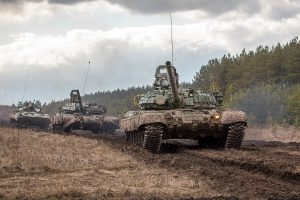
    Russian T-72 tanks conduct military exercises in Chebarkul, April 24, 2017 (Russian Ministry of Defense)

    Russia has invaded Ukraine from three sides, attacking from Belarus in the north, its own territory and the breakaway regions of Donetsk and Luhansk in the east, and Russian-controlled Crimea in the south.

    Explosions were reported in many Ukrainian cities on Thursday, including Odessa on the Black Sea, suggesting missile attacks from Russian navy ships.

    Russian soldiers took control of an airbase as well as the sealed-off Chernobyl nuclear power plant north of Kiev. Tanks were spotted on the outskirts of Kharkiv, where residents are spending the night in underground metro stations. Fighting is ongoing in Mariupol across the line of control from the Donetsk People’s Republic Russia — but no other country — has recognized as independent.

    Ukraine reports 57 fatalities. The United Nations estimates that 100,000 Ukrainians have fled. (more…)

  • Spain’s Casado Flirted with the Far Right and Lost

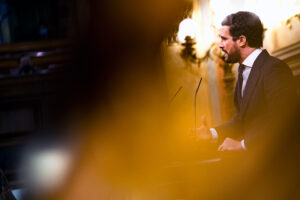
    Pablo Casado
    Spanish People’s Party leader Pablo Casado makes a speech in Congress in Madrid, April 14, 2021 (PP)

    A power struggle has broken out in Spain’s opposition People’s Party.

    Isabel Díaz Ayuso, the popular president of the region Madrid, has accused national party leader Pablo Casado of trying to “destroy” her by hiring private detectives to investigate allegations of corruption.

    Casado’s right-hand man and party secretary, Teodoro García Egea, has accused Ayuso in turn of making “almost criminal” insinuations.

    Other conservatives are taking sides. Esperanza Aguirre, who governed Madrid from 2003 to 2012, has defended Ayuso. Alberto Núñez Feijóo, the president of Galicia and leader of the moderate faction, has called the investigation into her “unforgivable”. Casado has the support of the mayor of Madrid as well as the party’s group leaders in Congress and the Senate. (more…)

  • Finlandization Is Not an Option for Ukraine

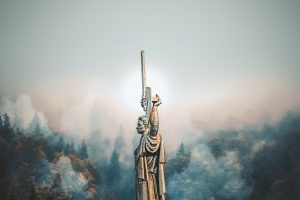
    Motherland Monument Kiev Ukraine
    Motherland Monument in Kiev, Ukraine, December 20, 2018 (Unsplash/Rostislav Artov)

    Since the outbreak of the Russo-Ukrainian War almost eight years ago, self-proclaimed realists in the West have peddled the same solution: “Finlandization”.

    Like Finland (and Austria) during the Cold War, Ukraine would be allowed closer economic integration with the rest of Europe but not NATO membership.

    I doubted this was a solution then, and everything that’s happened since should have put the notion to rest. Ukrainians don’t want to be Finlandized. Vladimir Putin wouldn’t be content with a neutral Ukraine. (more…)

  • Macron: Liberal In All But Trade

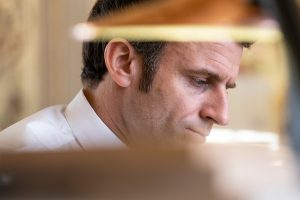
    Emmanuel Macron
    French president Emmanuel Macron makes a phone call from the Elysée Palace in Paris, January 28 (Elysée/Ghislain Mariette)

    Regular readers will know I’m a fan of Emmanuel Macron. He is probably the most liberal president France has had since the Second World War.

    Macron abolished a left-wing wealth tax that raised little revenue, eased regulations on small and medium-sized businesses, reined in generous salaries and pensions at the state railway, relaxed France’s strict labor laws and extended unemployment insurance to the self-employed. This week, he unveiled plans to build up to fourteen nuclear power reactors by 2050 to free France of fossil fuels.

    If he is reelected in April, Macron would have a chance to reform France’s bloated retirement system, something none of his immediate predecessors dared for fear of inciting protests.

    The one area in which Macron has been unwilling to challenge French orthodoxies is trade. (more…)

  • Little Has Changed in French Presidential Race

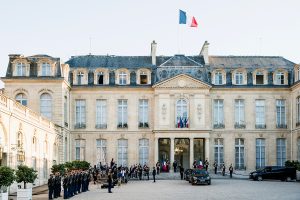
    Elysée Palace Paris France
    Elysée Palace in Paris, France, June 1, 2020 (Elysée/Philippe Servent)

    The first round of the French presidential election is eight weeks away. (The French vote on Sundays.) It’s not for lack of interest that I haven’t written about it since early December. It’s that so little has changed.

    • Éric Zemmour has split the far-right vote to the detriment of Marine Le Pen.
    • Valérie Pécresse has given the center-right a fighting chance, but not the upset they were hoping for.
    • The left is irrelevant.
    • Emmanuel Macron’s support is stable.

    I’ll take those one by one. (more…)

  • Catalans Bear Brunt of Spanish Judicial Activism

    Quim Torra
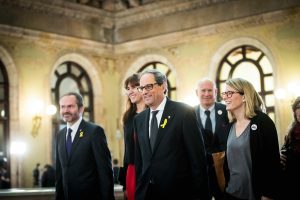
    Quim Torra enters the parliament of Catalonia to be sworn in as regional president, May 14, 2018 (Parlament de Catalunya/Miguel González de la Fuente)

    Catalan nationalists, up to and including the deposed regional president Carles Puigdemont, see the Spanish judiciary as part of a “deep state” that frustrates Catalan ambitions at every turn.

    That diminishes the meaning of the term “deep state”. Spain isn’t Egypt or Turkey.

    It does have judges who are more political, and more reactionary, than the rest of Western Europe. I saw the consequences after more than two million Catalans defied a Constitutional Court ban to vote in an independence referendum in 2017. (I lived in Barcelona at the time.) Politicians and protest leaders were arrested and imprisoned. Spanish courts overturned a Catalan presidential election. As recently as last week, judges ordered a Catalan lawmaker to give up his seat in the regional parliament. Spanish “lawfare” against the Catalan independence movement has entered its fifth year. (more…)

  • Germany Exports Its Energy Failures

    Olaf Scholz
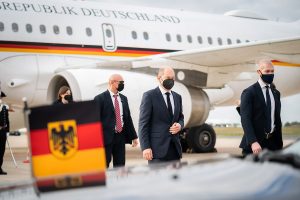
    German chancellor Olaf Scholz arrives in Rome, Italy, December 20, 2021 (Bundesregierung)

    The Netherlands is forced to drill for almost twice as much natural gas this year as it intended to, partly as a result of higher-than-expected demand from Germany.

    Germany requires an additional 1.1 billion cubic meters (bcm) of gas, and the Netherlands is contractually obliged to provide it.

    The Dutch need 2 bcm more for their own consumption plus 1.6 bcm to fill depleted stores for next winter.

    Altogether production must rise from 3.9 to 7.6 bcm — still a fraction of the 72 bcm of gas the Netherlands produced as recently as 2013.

    The Netherlands has small gas fields in the North Sea. The bulk of its gas is extracted from the northeastern region of Groningen. Or was, because the government had promised to shut down production there entirely.

    Years of drilling have caused increasingly violent earthquakes. The government has so far paid €220 million in compensation to owners of damaged homes. Another €250 million may be needed. A parliamentary inquiry into the government’s handling of the damage is due to begin next week.

    Which makes Germany’s request especially awkward for the Netherlands’ prime minister, Mark Rutte. He has asked the German chancellor, Olaf Scholz, for alternatives. (more…)

  • Portuguese Far Left Throws Away Leverage

    António Costa Pedro Sánchez
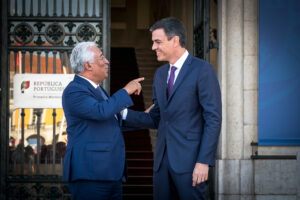
    Prime Minister António Costa of Portugal greets his Spanish counterpart, Pedro Sánchez, in Lisbon, July 2, 2018 (Governo da República Portuguesa/Clara Azevedo)

    Portugal’s far left put purity before power and lost power.

    Until 2015, neither the Communists nor Left Bloc had ever been in government. That year, the Socialists fell short of a majority and António Costa made a deal with the smaller parties. In return for policies like free textbooks in schools and a higher minimum wage, the far left would vote to make Costa prime minister. They were involved in annual budget negotiations, but they didn’t join his cabinet.

    The right dubbed it a “contraption,” but it worked. Costa could avoid the stigma of forming a coalition with extremists. The Communists and Left Bloc could still criticize Costa when, for example, he refused to raise salaries in the public sector or overturn the labor market reforms of his conservative predecessor.

    Until the left decided they wanted more. When Costa insisted on reducing Portugal’s budget deficit, from 5.8 percent of GDP in 2020 to a projected 4.4 percent in 2021, the Communists and Left Bloc withdrew their support. (more…)

  • How Can Biden Be Successful and Unpopular At the Same Time?

    Joe Biden
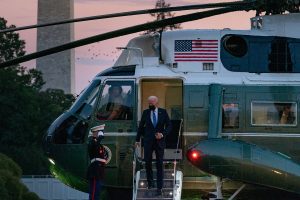
    American president Joe Biden disembarks Marine One on the South Lawn of the White House in Washington DC, October 15 (White House/Erin Scott)

    Earlier this week, I argued the media consensus about Joe Biden is too negative; that the first year of his presidency has been more successful than the headlines suggest.

    But Biden is also unpopular. Just 42 percent of Americans believe he’s doing a good job, down from 53 percent when he started. His party is projected to lose the midterm elections in November.

    Two things can be true:

    1. Biden had been moderately successful.
    2. He has focused too little on the issues Americans care about. (more…)