Author: Debalina Ghoshal

  • Russian S-300 Missile Sale Worries Iran’s Neighbors

    After world powers reached a preliminary agreement with Iran in April that is meant to prevent it from developing nuclear weapons, Russia quickly unblocked the delivery of sophisticated S-300 missile defense systems to the country.

    The weapons system could reduce the scope of Israeli and possibly Saudi attacks on Iranian nuclear facilities. Both states have expressed discontent with the nuclear talks which they feel do not go far enough to stop Iran’s program.

    Russia originally suspended the delivery of the S-300s in 2010 in support of an international effort to force Iran to the negotiating table, despite it having already paid $167 out of $800 million for the systems.

    In January, a Russian military official was quoted saying Iran could possibly get the even more advanced S-400 air defense system, suggesting that the decision to supply the S-300s was made before significant progress was made in the nuclear talks in Lausanne, Switzerland three months later.

    Russia’s decision to arm Iran is informed by at least two factors. (more…)

  • Why Turkey Still Considers Chinese Missile Defenses

    American missile test
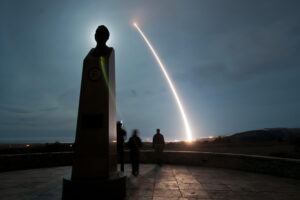
    An unarmed intercontinental ballistic missile is launched from Vandenberg Air Force Base, California, December 17, 2013 (USAF/Yvonne Morales)

    Despite not yet meeting all the conditions of its tender, Turkey may yet give a Chinese firm the contract to build a $3.4 billion missile defense system, raising concern among its NATO allies.

    A Turkish official told the Reuters news agency on Tuesday, “The talks with China are continuing but an agreement has not yet been reached as the tender conditions have not been completely fulfilled.” The source did not elaborate on what those conditions were.

    Turkey’s Western allies are troubled about the possible deal with the China Precision Machinery Import and Export Corporation (CPMIEC) which is under American sanctions for selling weapons to Iran, North Korea and Syria.

    European countries and the United States worry that such a missile defense agreement could give China access to Western military technology — which could then be passed on to Iran and Russia.

    In spite of the American missile shield being fielded in Europe, smaller states Turkey feel the need to develop missile defenses of their own in order to have complete control of them, rather than depending on the United States.

    It would not be the first time China has agreed to help develop defense systems for Turkey. The country’s J-600T Yıldırım ballistic missile system was based on Chinese designs after negotiations for technology transfers from the United States failed. But there is a myriad of issues Turkey needs to consider before making its decision. (more…)

  • NATO Missile Shield Prompts Russia to Expand Defenses

    While it calls for limitations on NATO’s missile defense shield in Europe and raises questions about the justification of such a system now that a nuclear deal with Iran seems within reach, Russia’s own missile defense systems capabilities have been strengthening.

    The combination of the United States building missile defenses in Europe and Russia enhancing its defensive capabilities could, as Bill Gertz argued in The Washington Free Beacon last year, “upset strategic stability and complicate efforts to reduce strategic offensive arms.” Not only is the development of such systems a concern; some of the systems are for export purposes too. Hence, it would accelerate the missile defense arms race on a larger scale.

    America’s refusal to provide information to Russia regarding the locations of its missile defense interceptors in Europe, the number of interceptors and their reaction speeds has prompted Russia to undertake a comprehensive missile defense program of its own. (more…)

  • Defying Sanctions, Iran, North Korea Help Syria Build Missiles

    According to a recent report in Jane’s Defence Weekly, Syria, despite being prohibited by sanctions for producing medium to long range missiles, is “accelerating its production of missiles and rockets effectively” at a pace similar to March 2011 — before the start of the uprising.

    Iran and North Korea are reportedly helping Syria overcome the international sanctions which make it harder to ship weapons components to the country.

    Cooperation in missile development between North Korea and Syria dates back to the 1980s. It is currently focused on improving Syria’s Scud-D missiles which are known to be fairly inaccurate but have a range of up to seven hundred kilometers — more than the distance between Damascus and Cairo.

    Iran is also helping Syria develop the Khaibar-1 missiles which has a range of up to one hundred kilometers and has been used by the Lebanese militant group Hezbollah, which supports the regime in Damascus, against Israel. (more…)