Tag: Latin America

  • Millions Flee Venezuela, But Maduro Is Going Nowhere

    Twenty years have passed since Hugo Chavez’ Bolivarian Revolution began in Venezuela. Although the first decade halved unemployment and brought poverty levels down to 27 percent, under President Nicolás Maduro there has been a dramatic economic, political and social decline.

    Inflation has skyrocketed and is expected to reach 1,000,000 percent this year. Shortages of basic goods have resulted in widespread malnutrition. The outbreak of previously forgotten diseases and violence has reached unprecedented levels. 73 lives are lost per day.

    This, combined with a political system that has barred and arrested opposition presidential candidates, sidelined an opposition-dominated legislature and last year carried out an election marred by an opposition boycott and claims of vote-rigging, has led to an exodus of almost 10 percent of Venezuela’s 30 million population. 90 percent of those who remain live in poverty.

    With such a parlous state of affairs, how has Maduro kept the show on the road?

    And why haven’t Venezuela’s neighbors, who are sheltering most of its refugees, acted to end the misery? (more…)

  • AMLO and Trump: Useful Scapegoats or Unlikely Allies?

    Mexico’s new president, Andrés Manuel López Obrador (AMLO), looks like the perfect adversary for Donald Trump. The American represents the financial elites and inequality AMLO has railed against his entire career whereas he himself embodies the hopes of Mexico’s poorest, many of whom have sought a better life in the United States — and who have been disparaged by Trump as criminals and rapists.

    But the two leaders also share traits: a populist style, policy light on detail and nostalgia for a bygone era.

    The two have avoided a confrontation on trade. Immigration and security provide more opportunities for compromise — but could just as easily cause the relationship to come unstuck. (more…)

  • Is Brazil’s Bolsonaro the Trump of the Tropics?

    Jair Bolsonaro
    Jair Bolsonaro makes a speech in the Chamber of Deputies of Brazil, September 14, 2016 (Agência Brasil/Marcelo Camargo)

    Brazil is the latest country to lurch toward right-wing nationalism. When Jair Bolsonaro resoundingly defeated his left-wing opponent, Fernando Haddad, in the country’s presidential election last month, news whirled around the world reporting this was Brazil’s Donald Trump.

    Bolsonaro is certainly keen to be Trump’s partner in Latin America. But is the comparison apt? And is it helpful to view each new iteration of right-wing nationalism through the Trump prism? (more…)

  • Stakes High for Colombia’s Presidential Novice

    Last month, 41 year-old Iván Duque was elected as Colombia’s youngest president ever with the largest vote in the country’s history.

    Turnout, at 53 percent, was the highest since 1998. The elections came on the heels of an historic peace deal with the far-left Revolutionary Armed Forces of Colombia (FARC), ending half a century of conflict. (more…)

  • Brazil’s Presidential Election Is Up in the Air

    Michel Temer Donald Trump
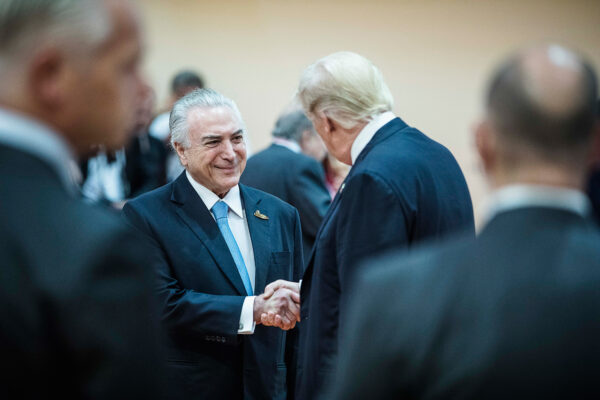
    Presidents Michel Temer of Brazil and Donald Trump of the United States meet at the G20 in Hamburg, Germany, July 8, 2017 (Bundesregierung)

    Brazil’s presidential election is less than four months away, yet it’s still far from clear what will happen. (more…)

  • With the Castros Gone, Is Change Afoot in Cuba?

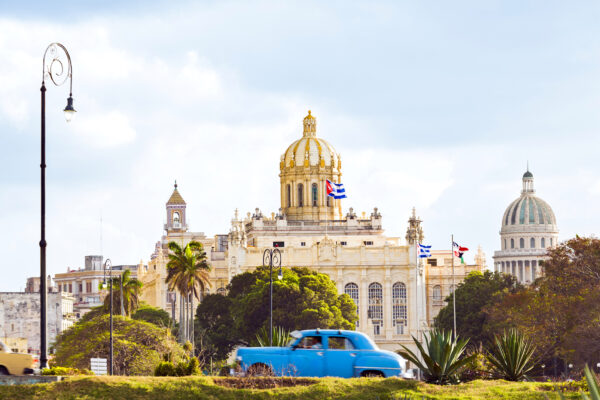
    Havana Cuba
    Skyline of Havana, Cuba (iStock/Spooh)

    The appointment of a new president in Cuba, Miguel Díaz-Canel, sixty years after the island’s socialist revolution, feels like a turning point.

    Once anointed by the 605-strong National Assembly as Cuba’s first non-Castro president in decades, Díaz-Canel vowed to modernize the economy and make government more responsive to its people.

    What does the change mean in practice?

    Not having a Castro, neither Fidel (1976-08) nor Raúl (2008-18), as leader carries with it great symbolism for sure. For the first time in many years, the powerful roles of president and head of the Communist Party are no longer combined. (Raúl remains party leader for three years.) But the Castro years weren’t quite as monolithic as they are sometimes portrayed and the next few years are unlikely to see a turnaround. (more…)

  • Dutch Caribbean Caught Up in ConocoPhillips-Venezuela Oil Dispute

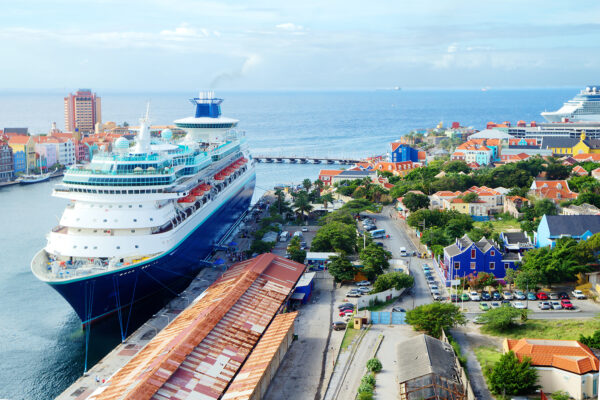
    Willemstad Curaçao
    Cruise ships moored in Willemstad, Curaçao (Shutterstock/Galina Savina)

    The Dutch Caribbean have been caught up in a legal dispute between the American oil company ConocoPhillips and the government of Venezuela.

    A judge has allowed Conoco to seize Venezuelan-owned and -operated refineries on the islands in order to collect $2 billion in compensation awarded by the International Chamber of Commerce for the 2007 nationalization of Conoco assets in the socialist-run country.

    The seizure poses a “potential crisis” to the economy of Curaçao, Prime Minister Eugene Rhuggenaath has told Reuters. The Isla refinery, which processes 335,000 barrels of oil per day, accounts for a tenth of the island’s economy. (more…)

  • What You Need to Know About the Election in Mexico

    Mexico’s general election on July 1 will involve roughly 3,400 new elected officials taking office and $2 billion in campaign finance. It has been dubbed the biggest election in Mexican history.

    It is important not only in terms of scale, but in terms of its new rules. For the first time, the ban on reelection does not apply and independent candidates can run.

    This heightened capacity for change coincides with an electorate moving from apathy toward anger. Last year, only 18 percent of Mexicans told pollsters they were satisfied with their democracy, down from 41 percent in 2016. Institutional confidence is at a nadir.

    Concerns about violence and insecurity related to drug cartels and organized crime are now coupled with deep frustrations about corruption and impunity as well as lopsided relations with the United States. (more…)

  • Piñera Back, But Chileans Need Convincing

    Sebastián Piñera unsurprisingly won back Chile’s presidency last week, defeating the governing party’s Alejandro Guillier in a runoff.

    Piñera last ruled the country from 2010 to 2014 but was constitutionally barred from serving a consecutive second term.

    What was surprising was the scale of his victory following a weak performance in the first voting round, where left-wing candidates got a combined 55 percent of the votes. (more…)

  • No Shock Therapy: Macri Takes Gradual Approach to Reform

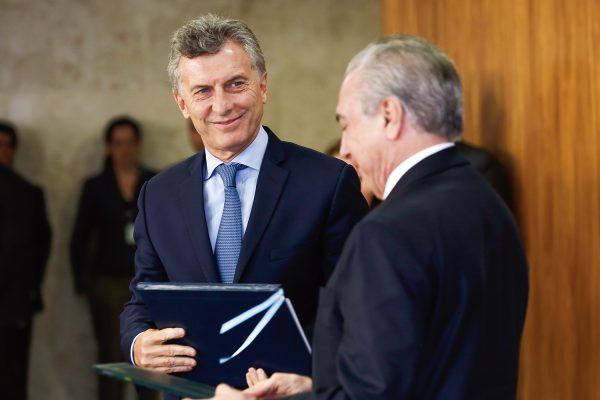
    Mauricio Macri Michel Temer
    Presidents Mauricio Macri of Argentina and Michel Temer of Brazil answer questions from reporters in Brasília, February 7 (Palácio do Planalto/Carolina Antunes)

    Argentina’s Mauricio Macri and his coalition have reasserted their position as the party of government following last month’s midterm elections. The first conservative to win the presidency since democracy was restored in 1983, his supporters won majorities in thirteen out of 23 provinces. They have also taken charge of five of the most populous districts in the capital Buenos Aires.

    Yet Macri’s party, Cambiemos (Let’s Change), still doesn’t have a majority in Congress, which helps explain his step-by-step approach to reforming the economy. (more…)

  • Chile Shows Better Way to Neighbors in Crisis

    Whether change comes swiftly or slowly, a deafness to cries for change can discredit not just politicians or political parties but whole systems of government.

    This has already happened in Venezuela. It’s in the process of happening in Brazil. Chile, however slowly, is showing a better way. (more…)

  • Venezuela Is a Geopolitical Tinderbox

    Surges of protests against a deeply unpopular government have catapulted Venezuela from back-burner regional crisis to a hemispheric one. It’s only a Russian presidential visit away from becoming the world’s next geopolitical hot spot.

    Medical supplies are running short, opposition leaders are calling for nationwide boycotts and now the Americans are rousing themselves to begin a sanctions regime against the beleaguered Maduro government.

    It’s quite the fall from grace. From 2004 until 2013, Venezuela’s economy rocketed upward, bringing a measure of prosperity to a country long accustomed to hardship. It appeared, in those heady days, that Hugo Chávez, the country’s authoritarian ruler, could bring about his socialist Bolivarian Revolution and economic prosperity. For the Latin American left, Venezuela was proof that one did not have to conform to the neoliberal capitalism of the United States to be successful.

    Alas, since 2013, the economy has slid further and further while inflation has hammered the country’s currency to the point of worthlessness.

    With America now poking its nose directly into Venezuelan affairs, with the opposition building a shadow government and with the Russians trying to shore up Nicolás Maduro’s government through increasingly generous aid shipments, the country has all the ingredients of a major geopolitical crisis.

    The Americans could find themselves sucked into an ever-expanding role in managing the Maduro regime; the opposition could give up on peaceful politics altogether and embark on an armed struggle; an opportunistic Vladimir Putin might wedge Russian power into South America in hopes of throwing the Americans off balance in Europe. (more…)

  • Dutch Relieved After Mainstream Parties Win Curaçao Election

    Willemstad Curaçao
    Flag of Curaçao in Willemstad (iStock/Flavio Vallenari)

    Former Curaçaoan prime minister Gerrit Schotte has lost the election on the island, avoiding a standoff with the European Netherlands, which is loath to work with the corrupt politician.

    Schotte’s populist Movement for the Future of Curaçao (MFK) gained one seat in the island’s legislature on Friday, winning five seats altogether, but mainstream parties did better.

    The liberal Party for the Restructured Antilles (PAR) and the social democratic Partido MAN won a majority between them. They can now govern alone, although they may add one or two small parties to round out a coalition. (more…)

  • Venezuela Lurches Toward Authoritarianism

    Venezuela has plummeted to new depths. In an act of blatant disregard of the separation of powers, the Supreme Court has stripped the opposition-controlled National Assembly of its lawmaking power and revoked immunity from all assembly members after accusing parliamentarians of “contempt”.

    This latest step toward authoritarianism was denounced as a “coup” and “a final blow to democracy” — not just by opposition parties, but by the international community and even some within the government (the state attorney general).

    It was this broad consensus that brought about a hasty volte face within a matters of days. President Nicolás Maduro reversed the judiciary’s decision in order to “maintain institutional stability”. (more…)

  • Netherlands Intervenes in Curaçao to Make Sure Elections Proceed

    The Dutch government has given extraordinary powers to the governor of Curaçao to allow elections to go forward on the island despite opposition from its ruling parties.

    Lucille George-Wout, who nominally represents the Dutch king, has been given authority over public services to make sure the elections can proceed.

    It is the first time the Netherlands has intervened so overtly in the politics of the Caribbean island since it became self-governing in 1954.

    Dutch interior minister Ronald Plasterk justified the move, saying election workers had been threatened with dismissal for organizing the vote.

    “It is of the utmost importance that the people of Curaçao can have free and fair elections about the future of the island,” he said. (more…)