Tag: Iran

  • Russian Strikes from Iran Point to Burgeoning Anti-Western Pact

    For the first time in an almost year-long bombing campaign, Russian aircraft have used facilities in Iran to conduct strikes against in the Syrian cities of Aleppo, Deir ez-Zor and Idlib.

    Iranian-Russian military cooperation is not unprecedented. The two took part in joint naval exercises in the Caspian Sea last year and Russia launched a salvo of missiles across Iranian territory into Syria. However, this latest news underlines the budding relationship between the two.

    I have previously written that the close proximity of Russian air forces and Iranian ground forces in Syria raises questions about the two powers’ relationship. Fighting wars together — even those as convoluted as Syria’s — is something allies tend to do. This particular cooperation has been controversial, though, with many commentators suggesting that the Iranian-Russian alliance in Syria is one of convenience. (more…)
  • Don’t Take Iran Becoming a Better Place for Granted

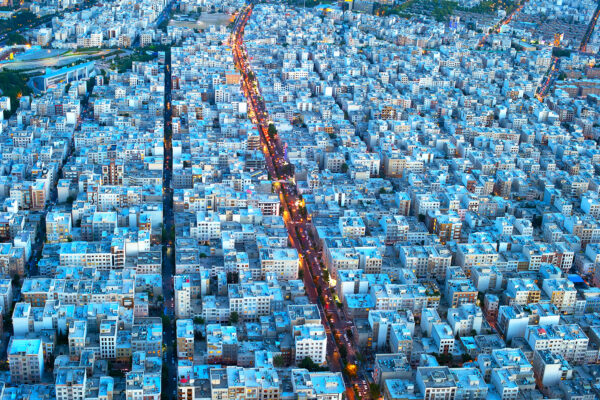
    Tehran Iran
    View of Tehran, Iran from the Milad Tower at night (Shutterstock)

    While America’s upcoming election fills many with worry, the Islamic Republic of Iran had a quiet yet meaningful election all of its own. The results shoved aside the hardliners who have for so long dominated Iran’s many branches of the Islamic republic, stuffing the all-important Assembly of Experts with relatively moderate forces poised to elect a supreme leader with the potential to turn Iran into a force for stability.

    But no geopolitical road runs straight forever. There are many forces that might upset this applecart. Here now is the tale of Iran’s revolution, evolution and potential path forward. (more…)

  • What Oil Prices Mean for Geopolitics

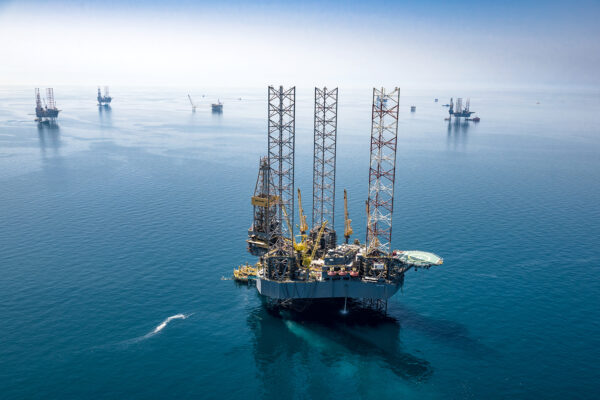
    Persian Gulf drilling platforms
    Saudi drilling platforms in the Persian Gulf (Aramco)

    2003 was a different era. The United States waged a war of choice in Iraq; Vladimir Putin’s Russia was seen as a paper tiger; China’s economic boom roared but didn’t threaten; Dubai was unknown; and the United States seemed like it would forever be an oil importer.

    Much has changed. But today, the price of oil dropped to $27 a barrel, last seen in the heady days of the first W. Bush Administration.

    There’s a lot going on here. Let’s get super. (more…)

  • Saudi Arabia Versus Iran: The Deeper Story

    There are other shorter articles and they do a fine job of covering the basics. If that’s all you’re looking for, click on the link and consider yourself well-rewarded. But if you desire more than tidbits, read on. (more…)

  • Russian S-300 Missile Sale Worries Iran’s Neighbors

    After world powers reached a preliminary agreement with Iran in April that is meant to prevent it from developing nuclear weapons, Russia quickly unblocked the delivery of sophisticated S-300 missile defense systems to the country.

    The weapons system could reduce the scope of Israeli and possibly Saudi attacks on Iranian nuclear facilities. Both states have expressed discontent with the nuclear talks which they feel do not go far enough to stop Iran’s program.

    Russia originally suspended the delivery of the S-300s in 2010 in support of an international effort to force Iran to the negotiating table, despite it having already paid $167 out of $800 million for the systems.

    In January, a Russian military official was quoted saying Iran could possibly get the even more advanced S-400 air defense system, suggesting that the decision to supply the S-300s was made before significant progress was made in the nuclear talks in Lausanne, Switzerland three months later.

    Russia’s decision to arm Iran is informed by at least two factors. (more…)

  • Senators Pull Support from Iran Sanctions After Ultimatum

    Just last week, it looked as if the United States Senate was close to bringing a bipartisan bill to the floor that could have potentially threatened the success of the Obama Administration’s nuclear talks with Iran. The legislation, written by Democratic Robert Menendez and Republican Mark Kirk, would blacklist an even greater amount of Iran’s economy if its leaders backed out of the interim agreement signed last November or failed to arrive at a comprehensive deal to dismantle a significant portion the Islamic country’s uranium enrichment infrastructure. When the bill was first introduced, it drew overwhelming support from both parties, with 59 senators signing on as co-sponsors — one vote shy of the supermajority necessary to override a filibuster.

    Yet thanks to months of tenacious behind the scenes lobbying from White House officials and a public veto threat from President Barack Obama during his State of the Union speech on Tuesday, the sanctions bill that could otherwise have breezed through the Senate has lost momentum. (more…)

  • Kerry Faces Skeptical House Panel on Iran Nuclear Deal

    Secretary of State John Kerry experienced just how difficult it will be for the Obama Administration to get members of Congress on board with the interim nuclear agreement that was signed with Iran last month. Testifying before the House of Representatives’ Foreign Affairs Committee on Tuesday, Kerry was hammered for nearly three hours by Democrats and Republicans alike about the incomplete nature of the deal that was negotiated in Geneva, the $7 billion in sanctions relief that Iran is due to receive over the next six months and whether any final agreement would allow the Islamic republic to preserve a low level uranium enrichment capability.

    Republican Ed Royce, the chairman of the committee, criticized what he saw as the administration’s soft negotiating strategy toward Iran, calling the agreement a much needed opportunity for the Iranians to receive billions of dollars without dismantling a single centrifuge.

    “My concern,” the California congressman said, “is that we have bargained away our fundamental position in exchange for a false confidence that we can effectively check Iran’s misuse of these key nuclear bombmaking technologies.” (more…)

  • Senate Threatens More Sanctions as Iran Talks Resume

    For the second time in nearly three weeks, America’s secretary of state, John Kerry, changed his travel schedule on Friday to attend nuclear talks with Iran in Switzerland. At home, lawmakers were growing restless.

    The last time Kerry attended the negotiations in Geneva between the world’s major powers and Iran, a deal seemed at hand but failed to materialize when the five permanent members of the United Nations Security Council plus Germany refused to recognize Iran’s right to enrich uranium. France also walked out, reportedly because the closure of a key plutonium plant was not part of the agreement. (more…)

  • Parties Critical of Obama’s Iran Strategy

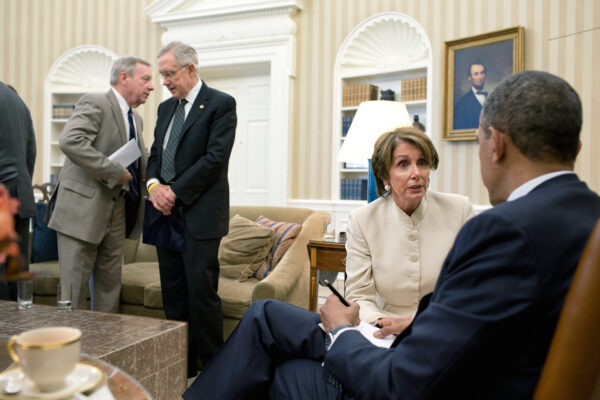
    Dick Durbin Harry Reid Nancy Pelosi Barack Obama
    Democratic leaders Dick Durbin, Harry Reid and Nancy Pelosi meet with President Barack Obama in the Oval Office of the White House in Washington DC, July 11, 2012 (White House/Pete Souza)

    When America’s secretary of state, John Kerry, made an unexpected trip to Geneva, Switzerland last weekend, there was hope in the international community that Iran and the world’s major powers were close to a nuclear deal. A successful agreement, however short-term, would have been seen as a big political victory for the Obama Administration at a time when its foreign policy credentials have been challenged by a host of shimmering conflicts abroad, from the civil war in Syria to a moribund Israeli-Palestinian peace process.

    It turned out the deal that many thought possible was beyond the grasp of negotiators last weekend. It is not exactly clear who scuttled the momentum. Some reports point to the French who appeared to insist on more restrictions. Others blame the Iranians for failing to budge on some of their core demands involving the right to enrich uranium.

    In the long run, whoever was to blame matters little. What matters is what impact the failed talks will have on the diplomatic process that the Obama Administration is now so dearly invested in. (more…)

  • What Iran’s New Drone Aircraft Mean for Israel

    During televised press briefings on the 33rd anniversary of the Iran-Iraq War and with demonstration videos on hand, the Islamic Republic of Iran last week announced the production of three lines of unmanned aerial vehicles (UAV) that could see deployment within the year. The drones, dubbed the Yaseer, the Ra’ad-85 and the Shahed-129, have apparently been designed to perform in both reconnaissance and combat roles and will allow Iran greater capacity to monitor and enforce activities at home and, potentially, across the region.

    UAV technology has not, until now seemingly, been effectively deployed by Iran. Patrolling sovereign airspace and undertaking aerial strike missions, like those prosecuted during the Iran-Iraq War, has for years been the responsibility of Iran’s missile corps and, with aging planes like the F-14 Tomcat and the MiG-29, the air force’s manned fighter fleet.

    New unmanned systems would, if feasible in their deployability, allow for a significant expansion of the country’s capacity to both gather intelligence and surgically project power at home and in its near abroad. After all, from the lightly built Yaseer to the heavy Shahed, each of Iran’s new drone systems will have advanced reconnaissance suites, including high resolution cameras and communications equipment, as well as the capacity to launch precision strike munitions. (more…)

  • Hardliners Let Obama-Rouhani Diplomacy Play Out, For Now

    The recent rhetorical goodwill between Iran and the United States seems to have dampened the animosity and mistrust that existed between the two nations for 34 years. But unless the diplomatic opening achieves clear results, hardliners may yet close the door on talks.

    A relatively conciliatory speech from Iran’s new president, Hassan Rouhani, before the United Nations set the stage for a preliminary discussion between Secretary of State John Kerry and his Iranian counterpart, Mohammad Javad Zarif, on the sidelines of the annual General Assembly meeting last week. Rouhani’s first trip to New York as Iran’s leader ended in a dramatic fashion — with a brief but historic phone call with President Barack Obama on his way to the airport.

    However, as commentators and officials keep repeating, words are one thing; actions and concessions are something else entirely. (more…)

  • Obama, Rouhani Try Telephone Diplomacy, Lawmakers Skeptical

    After their respective speeches to the United Nations General Assembly in New York, Presidents Barack Obama of the United States and Hassan Rouhani of Iran returned to their own corners without the historic handshake that observers were hoping for. Given the constant speculation in the media of an informal meeting between the two leaders, the news that a handshake would not occur came as a disappointment. Some saw Rouhani’s refusal to meet Obama as a snub. Others labeled it a missed opportunity.

    It appears that Obama and Rouhani had something else in mind. Just as an American-Iranian détente threatened to unravel, Obama stepped behind the White House podium and stated, to everyone’s surprise, that he had spoken directly with Iran’s new president on the phone. “Going forward,” Obama said, “President Rouhani and I have directed our teams to continue working expeditiously to pursue an agreement” on Iran’s nuclear enrichment program.

    More so then a public handshake, the phone call between Obama and Rouhani is an historic moment. As Susan Rice, Obama’s national security advisor, later reiterated on CNN, this was the first direct American-Iranian contact between heads of state since the 1979 revolution that deposed the shah. (more…)

  • Iranian Leader Expected to Urge Dialogue in United Nations Address

    While thousands of international diplomats are attending this week’s festivities at the annual United Nations General Assembly, American officials are squaring most of their attention on Iran’s new president, Hassan Rouhani.

    Since his surprising victory in Iran’s presidential election this summer, the former nuclear negotiator and cleric has generated his fair share of excitement in world capitals, talking of moderation, coming together in pursuit of shared goals and expressing a willingness to become more transparent about his country’s nuclear enrichment efforts.

    Compared to his predecessor, Mahmoud Ahmadinejad, Rouhani comes across as a wise sage who understands the nuances and sensitivities of international politics. The president himself criticized Ahmadinejad’s administration for speaking in bold, black and white terms and conducting a foreign policy that, he said, resulted in nothing but global sanctions preventing Iran from exporting its oil.

    With an economy in tatters, Rouhani recognizes that he needs to change how Iran does business if there is any hope for those sanctions to be relaxed. (more…)

  • Iranians, West Hope New President Will Break with Past

    After being endorsed by Supreme Leader Ayatollah Ali Khamenei a day earlier, Hassan Rouhani was formally inaugurated by Iran’s Majlis on Sunday as the country’s new president. With Khamenei watching on stage, the reigns of the presidency were officially handed over by Mahmoud Ahmadinejad in a symbolic gesture.

    Even before surprising international observers with a resounding win over his reactionary opponents in the June presidential election, Rouhani was a recognizable and highly respected individual in the Islamic republic’s political system. A man with considerable religious credentials, Rouhani managed his country’s National Security Council for sixteen years during the presidencies of Hashemi Rafsanjani and Mohammad Khatami. His stewardship of the council occurred at a time when Tehran was slowly trying to improve its public image after a long and bloody war with Iraq and later during a period when American soldiers were miles from Iran’s eastern and western borders. (more…)

  • Britain’s Hague Right to Restore Relations with Iran

    It was reported yesterday that in a telephone conversation with the Iranian foreign minister, William Hague said that he is open to improving ties between his country and the United Kingdom. Relations were severed nearly two years ago when mobs attacked the British embassy in Tehran. Frankly, it’s about time.

    Both David Cameron and the foreign secretary imagine themselves to be “grand strategists,” yet they have shown little strategic nous as far as Tehran is concerned. We want to withdraw peacefully from Afghanistan, end the conflict in Syria, and stop the Iranians from developing a nuclear capability. Achieving all of these goals depends on having a better relationship with Iran.

    If we want the Tehran regime to stop its nuclear program, then we need to convince them that the West is not a threat to them. Toppling Bashar al-Assad in Syria would isolate them in the region, as some predict, but isolation is likely to make them more committed to possessing a nuclear capability. We need to negotiate a settlement between the Syrian rebels and the Assad regime and we need Iran to help us. (more…)