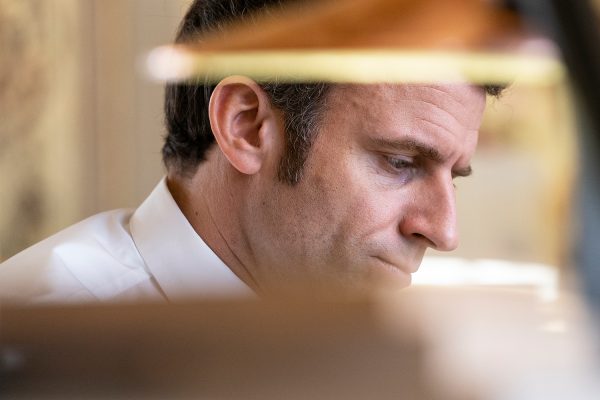
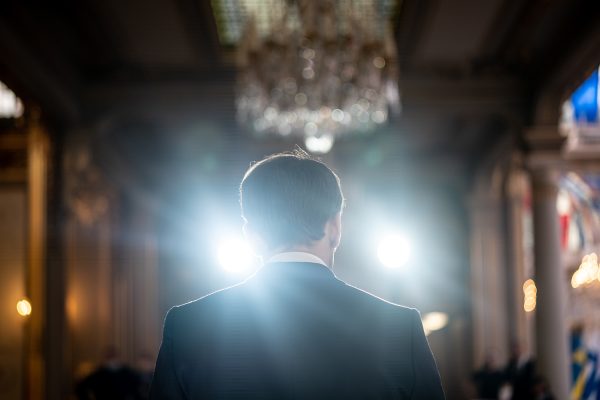
French president Emmanuel Macron makes a phone call from the Elysée Palace in Paris, January 28 (Elysée/Ghislain Mariette)
Emmanuel Macron has defeated Marine Le Pen for the second time. He is the first French president in twenty years to win reelection. The last was Jacques Chirac, who in 2002 defeated Le Pen’s father, Jean-Marie.
Macron’s projected 58 percent support is down from the 66 percent he got in 2017.
He is also far less certain of winning another majority in the National Assembly, which puts his plans for a second term at risk.
Although the French presidency is one of the most powerful of its kind, without a parliamentary majority Macron might have to nominate a prime minister of another party (the French call this “cohabitation”) and could not cut taxes, invest €50 billion in green energy or raise the retirement age from 62 to 65. (more…)
French president Charles de Gaulle visits the Netherlands, March 16, 1963 (Anefo/Eric Koch)
France’s divisions haven’t healed. Like five years ago, Emmanuel Macron, the candidate of the cities, the optimists, the outward-looking and the university-educated, faces Marine Le Pen, the candidate of the small towns, the worried, the inward-looking and the working class, in the second and final voting round of the presidential election.
The surprise of the first round was Jean-Luc Mélenchon’s strong third-place finish with 22 percent support, behind Le Pen’s 23 percent and Macron’s 28.
Rather than a country split in two, France turns out to have three political blocs of almost equal size.
This is a throwback to earlier times. Historian Sudhir Hazareesingh writes that France had three political families until Charles de Gaulle replaced proportional representation with a two-round voting system in 1958 that encouraged the formation of two parties. The center-right united into what is now the Republican party. The Communists were eclipsed by the Socialists on the left. (more…)
France Unbowed leader Jean-Luc Mélenchon sits in the European Parliament in Brussels, June 6, 2019 (The Left)
Supporters of Jean-Luc Mélenchon who are thinking of sitting out the second voting round of the French presidential election ought to take a lesson from Bernie Sanders’ supporters in the United States. When they abstained from the 2016 presidential election, or voted for Green party candidate Jill Stein, they made it possible for Donald Trump to win.
Just 1.5 out of 136 million Americans voted for Stein. Another 100,000 wrote in Sanders’ name (in the fourteen states where that was allowed), even though he wasn’t a candidate and had endorsed Hillary Clinton.
But those 1.6 million votes made the difference. Clinton lost Michigan, Pennsylvania and Wisconsin, three states Barack Obama had won four years earlier, by a margin of less than 1 percent and a total of 75,000 votes. In all three states, the votes for Stein could have tipped the balance in Clinton’s favor, which would have given her, not Trump, an Electoral College majority. (more…)
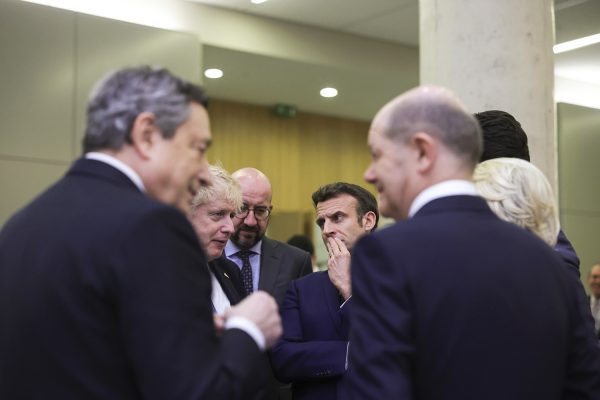
Prime Ministers Mario Draghi of Italy and Boris Johnson of the United Kingdom speak with President Emmanuel Macron of France and Chancellor Olaf Scholz of Germany during a NATO summit in Brussels, March 24 (10 Downing Street/Andrew Parsons)
Emmanuel Macron has suggested he could water down French pension reforms in a second term.
“I am clearly opening the door” to a retirement age of 64, he told BFM TV on Monday, adding that “65 years old was not a dogma.”
Germany and the Netherlands are raising their retirement ages from 65 to 67.
Macron also hinted he might call a referendum on the changes. “I don’t want to divide the country.”
French president Emmanuel Macron delivers a televised address from the Elysée Palace in Paris, February 24 (Elysée/Soazig de La Moissonnière)
This year’s French presidential election will be a rematch of the last. According to exit polls, Emmanuel Macron and Marine Le Pen have won the first voting round and will advance to the second in two weeks.
Ipsos and Sopra Steria give the incumbent 28 percent support and the far-right Le Pen 23 percent. The far-left Jean-Luc Mélenchon would place third with 22 percent. The other candidates are in single digits.
Macron defeated Le Pen with 66 to her 34 percent in the 2017 election. Polls suggest this year’s runoff will be tighter.
Here are my takeaways from the first voting round. (more…)
Emmanuel Macron and Marine Le Pen have won the first voting round in the French presidential election.
With 95.5 percent of the votes counted, Macron, the incumbent, is at 28 percent support and Le Pen, the leader of the far right, at 23 percent. Far-left candidate Jean-Luc Mélenchon places third with 22 percent.
The April 24 runoff will be a rematch of the 2017 election, when Macron defeated Le Pen with 66 to her 34 percent. Polls predict a narrower margin this year. (more…)
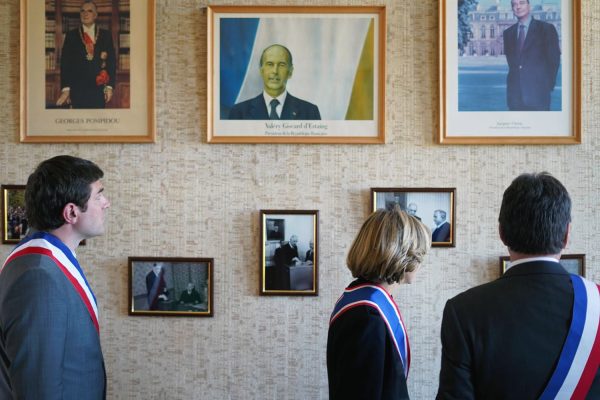
French Republican party leader Valérie Pécresse reviews an exhibit of French presidents at the Mémorial Charles de Gaulle in Colombey-les-Deux-Églises, October 5, 2018 (Facebook/Valérie Pécresse)
The first round of the French presidential election will be held on Sunday. Assuming no candidate wins a majority, the top two candidates will advance to a runoff on April 24.
Polls predict incumbent president Emmanuel Macron will place first in the opening round and win the second round, but the far-right Marine Le Pen and far-left Jean-Luc Mélenchon aren’t far behind.
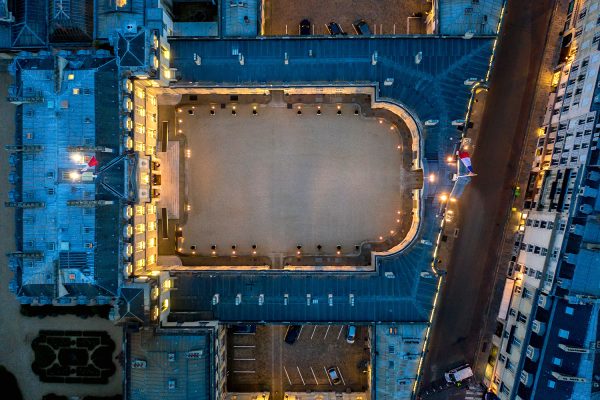
Aerial view of the Elysée Palace in Paris, France at night, March 12, 2019 (Elysée/Laurent Blevennec)
Polls are narrowing in France. Incumbent president Emmanuel Macron is losing support. The far-left Jean-Luc Mélenchon and far-right Marine Le Pen are going up.
The most likely outcome is still that Macron and Le Pen qualify for the runoff, and Macron wins. But that is less certain than it was three weeks ago.
There are also legislative elections in June, for which there hasn’t been much polling. Macron’s liberal party, The Republic on the Move (LREM), is expected to lose seats to the Greens and Socialists on the left and the Republicans on the right. What the French call “cohabitation”, and the Americans “divided government” — in which two parties split the presidency and National Assembly — is likely.
Here are the five possible outcomes in order of probability (as I see it), and what they would mean for French policy. (more…)
French president Emmanuel Macron gives a speech in Nîmes, December 6, 2019 (Elysée/Soazig de la Moissonniere)
When we endorsed Emmanuel Macron in 2017, it was because he was the best candidate to make France competitive and confident again. He has. French voters should give him a second term.
Macron relaxed French labor laws, which had been among the strictest in the world. Unemployment fell to a thirteen-year low. He eased auditing requirements, streamlined bankruptcy procedures and lowered social charges and taxes for entrepreneurs. Business creation rose 60 percent.
Foreign investors were impressed. Before the pandemic, France even overtook Germany and the United Kingdom as the top destination of foreign investment in Europe.
Opponents have lampooned Macron as a “president of the rich” for putting the economy first. But he also enrolled freelancers in public unemployment insurance, extended welfare to one million more households, and made dental services, eyeglasses and hearing aids free.
France became a leader again in Europe. Macron didn’t win every argument in Brussels, but the EU looks and sounds more French than it did five years ago. Xi Jinping’s authoritarianism and Donald Trump’s isolationism have convinced the other member states to give France’s proposals for European “strategic autonomy” a chance. Vladimir Putin’s invasion of Ukraine has given European defense cooperation, long favored by the French, a new lease on life. With five more years, Macron could put those ideas into action. (more…)
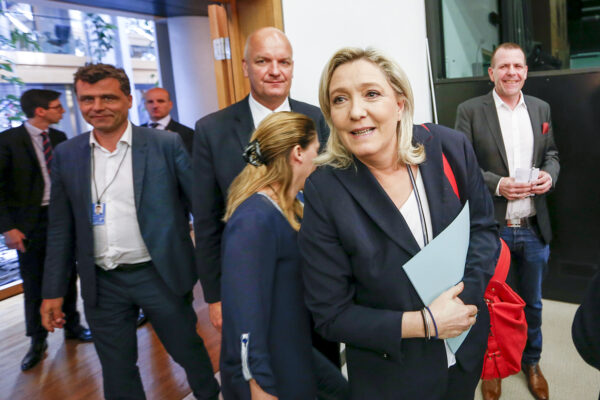
French party leader Marine Le Pen makes her way to a news conference in Strasbourg, May 11, 2016 (European Parliament/Fred Marvaux)
Twelve candidates have qualified to compete in the French presidential election. Only six are polling at more than few percentage points. I will summarize their policies here, plus those of Anne Hidalgo. The mayor of Paris has just 2 percent support in recent surveys, but her Socialist Party could still be a force in the legislative elections in June.
The comparison reveals strange bedfellows. The centrist Emmanuel Macron and center-right Valérie Pécresse see eye to eye on asylum and pension reform. Macron’s climate policies are closer to the Green party’s candidate, Yannick Jadot. Jadot and the far-right Marine Le Pen emphasize animal welfare. Le Pen and the far-left Jean-Luc Mélenchon agree on renationalizing motorways. Mélenchon and the far-right Éric Zemmour believe NATO is obsolete.
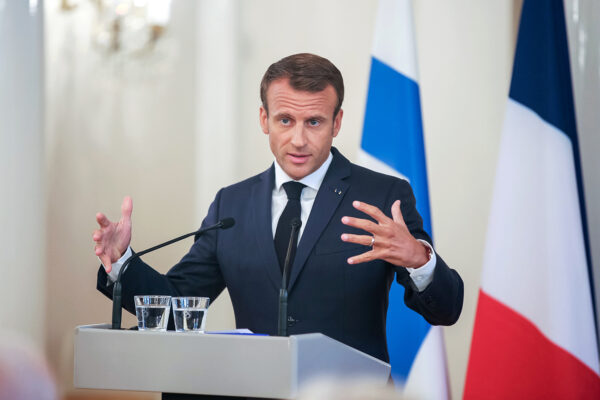
French president Emmanuel Macron answers questions from reporters in Helsinki, Finland, August 30, 2018 (Office of the President of the Republic of Finland/Juhani Kandell)
Emmanuel Macron is projected to place first in the opening round of the French presidential election in two weeks, which would make him the favorite for the runoff another two weeks later.
Macron has been in power since 2017 and is only the second of eight presidents who didn’t come from the Gaullist right or the Socialist left. “Liberal” is a dirty word in France, synonymous with Anglo-American capitalism, so Macron calls himself a “centrist” and a “progressive”. But he has governed as a liberal.
Here is an overview of his successes and failures. (more…)
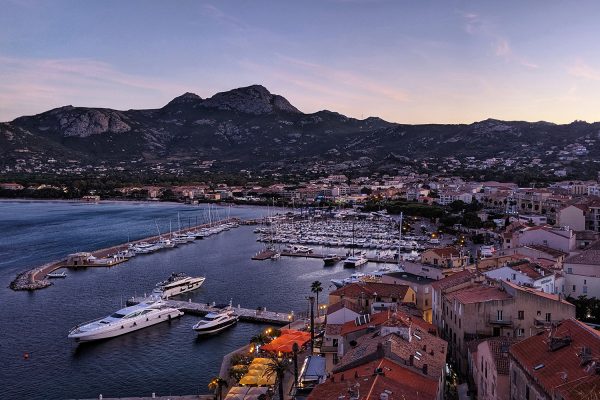
Night falls on the harbor of Calvi, Corsica, October 15, 2019 (Unsplash/Hannah Wright)
Corsica was rocked by violent protests this month after Yvan Colonna, a Corsican nationalist, was attacked in a French prison by a fellow inmate. Colonna died of his wounds on Monday.
He was serving a life sentence in Arles, a small city west of Marseilles, for the murder of Claude Érignac, Corsica’s top regional official in 1998. Colonna had petitioned several times to be transferred to a Corsican prison but was denied every time.
Despite widespread condemnation across Corsican society of Érignac’s murder, Colonna was still viewed by many as a nationalist hero. The fact that he died in a prison in mainland France added insult to injury. As did the fact that he was killed by a convicted jihadist of African descent. Relations between Corsica’s native and immigrant populations have been tense for years. (more…)
French president Emmanuel Macron makes a phone call from the Elysée Palace in Paris, January 28 (Elysée/Ghislain Mariette)
Regular readers will know I’m a fan of Emmanuel Macron. He is probably the most liberal president France has had since the Second World War.
Macron abolished a left-wing wealth tax that raised little revenue, eased regulations on small and medium-sized businesses, reined in generous salaries and pensions at the state railway, relaxed France’s strict labor laws and extended unemployment insurance to the self-employed. This week, he unveiled plans to build up to fourteen nuclear power reactors by 2050 to free France of fossil fuels.
If he is reelected in April, Macron would have a chance to reform France’s bloated retirement system, something none of his immediate predecessors dared for fear of inciting protests.
The one area in which Macron has been unwilling to challenge French orthodoxies is trade. (more…)
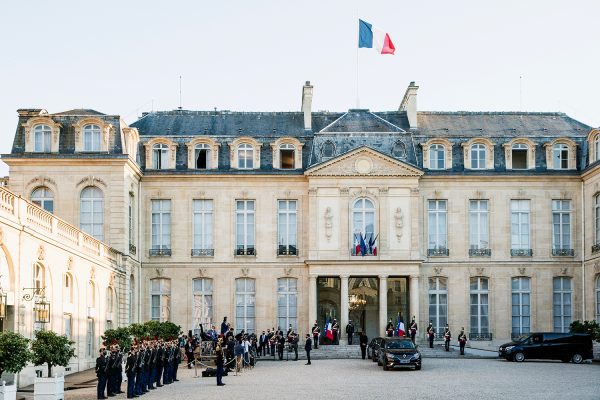
Elysée Palace in Paris, France, June 1, 2020 (Elysée/Philippe Servent)
The first round of the French presidential election is eight weeks away. (The French vote on Sundays.) It’s not for lack of interest that I haven’t written about it since early December. It’s that so little has changed.
Éric Zemmour has split the far-right vote to the detriment of Marine Le Pen.
Valérie Pécresse has given the center-right a fighting chance, but not the upset they were hoping for.