Tag: France

  • Sarkozy’s Hard Line Pushes Center-Right Voters to Juppé

    Alain Juppé
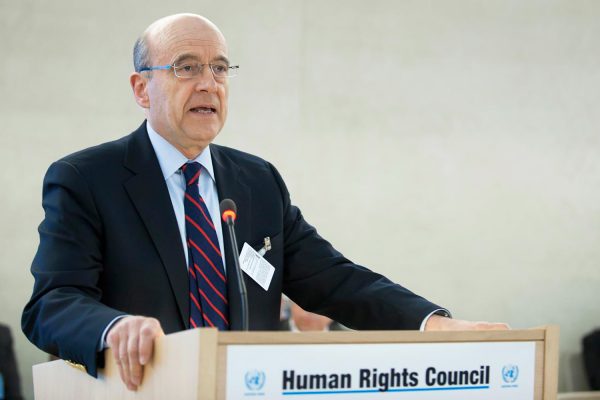
    French foreign minister Alain Juppé gives a speech at the Human Rights Council in Geneva, Switzerland, February 27, 2012 (UN/Jean-Marc Ferré)

    Polls suggest former French president Nicolas Sarkozy’s right-wing strategy to win his party’s presidential nomination is not paying off.

    After the seven Republican candidates vying to replace François Hollande, the Socialist Party incumbent, next year participated in the first televised debate of the primary last week, Alain Juppé, a former prime minister, remained in the lead with almost 40 percent support.

    Sarkozy is polling around 33 percent. (more…)

  • Post Brexit, France May Get the European Army It Always Wanted

    François Hollande David Cameron
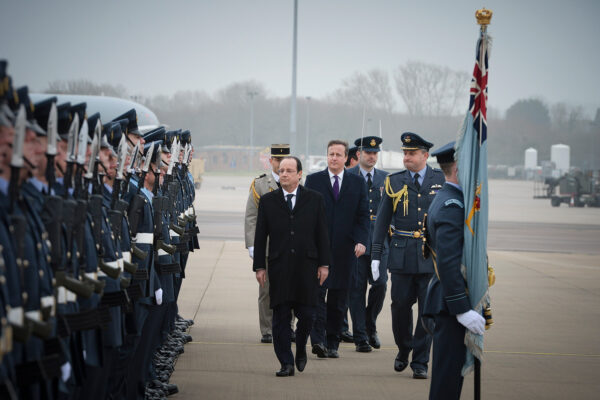
    French president François Hollande and British prime minister David Cameron visit Royal Air Force Brize Norton in Oxfordshire, January 31, 2014 (RAF/Dave Rose)

    I argued here last year that a European army wasn’t going to happen. Only the French were interested, I wrote. The Germans were ambivalent. The British were against it. “Defense is a national — not an EU — responsibility,” they said at the time, when Jean-Claude Juncker, the president of the European Commission, floated the idea of a defense union.

    Now Juncker is back with his proposal and the difference, of course, is that the British are leaving.

    The Luxemburger reiterated his support for an EU army in a speech to the European Parliament last week, sending Britain’s Euroskeptic press into a frenzy. “Nigel Farage was right!” roared the Sunday Express. “Got out just in time,” opined The Sun.

    It’s easy to dismiss Juncker’s idea as just the latest tone-deaf European federalist scheme that will go nowhere — and this would have been true if the United Kingdom wasn’t on the way out.

    Now we have to take this seriously. (Thanks, Brexiteers.) (more…)

  • Macron Still an Unlikely Contender for French Presidency

    French economy minister Emmanuel Macron stepped down on Tuesday, presumably to plan a presidential candidacy for the election next year.

    “I have touched the limits of our system, the last-minute compromises, its imperfect solutions,” Macron said in a speech. “I want to start a new phase of my fight today.”

    He stopped short of revealing his presidential ambitions, but coming four months after the launch of his own centrist political movement, En Marche!, there is little doubt in France what the former investment banker is up to. (more…)

  • Europe’s Post-Paris Attacks Solidarity Wanes

    In the aftermath of the November terrorist attacks in Paris, words of solidarity resounded around Europe. But actions have since been harder to find.

    Indeed, at a time when the European Union’s legitimacy is questioned across the continent, the twin challenges of terror and immigration have provoked and amplified divisions. The prospect of peace and long-term prosperity is being jeopardized by a combination of perceived inaction and reactionary decisionmaking. (more…)

  • Why the Hell Would ISIS Attack Paris? Geopolitics of Terrorism

    Paris France
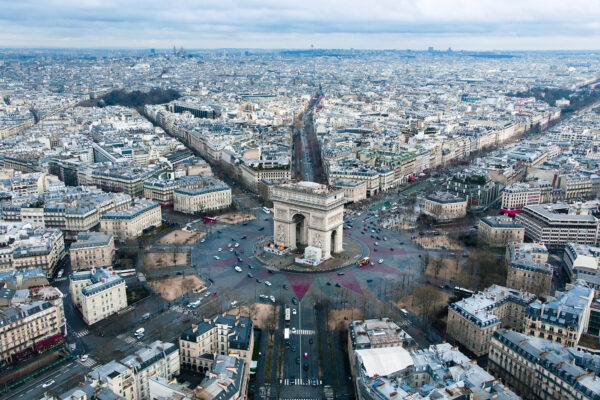
    Aerial view of the Arc de Triomphe in Paris, France (Unsplash/Rodrigo Kugnharski)

    It was not, of course, just Paris this weekend: Beirut also felt the murderous strategy of militant Islam. For those who are attuned to ignoring the developing world, the attacks in Paris were shocking, confusing and subject to simplistic explanation: they hate us, they hate freedom, they want Sharia, etc., etc.

    But when it comes to organizations training, supplying and directing acts of terrorism, hate and religion are not the explanations we seek. Organizations, like nation states, are neither suicidal nor nihilistic: they seek to empower themselves and gain security through whatever means are available to them.

    And understanding this need goes a long way towards understanding what happened this weekend. (more…)

  • Anti-Immigration Parties Drive Conservatives to Fringe

    “Far right” or “extreme right-wing” parties have emerged across Europe in recent years, if with varying levels of electoral success, demonstrating that they cannot be termed as constituting a pan-European movement. But they do have characteristics in common. Chief among them, from the perspective of European politics as a whole, is that they’re driving mainstream right-wing parties to the fringe.

    In several countries, including Britain, Ireland and Spain, the far right has repeatedly failed to garner a considerable share of the votes whereas in France, the Front national‘s Marine Le Pen got almost 18 percent support in the first round of last year’s presidential election, consolidating the nationalist party’s position as the “third force” in French politics.

    The rise of far-right movements is closely linked to mass immigration into Europe, especially from developing countries that used to be European colonies and former communist states in Eastern Europe. The inclusion of some of the latter in the European Union has brought about a loss of national sovereignty in the traditional Westphalian sense, moreover, and has also served to foster a malaise among populations whose sense of national identity is in a state of flux. Right-wing parties tend to take advantage of this social identity cleavage within European communities, coupling it with an alarm over high immigration.

    The ideological core of these movements is the concept of the sovereign nation state. Their narrow definition of who and what constitutes the nation is of key importance to understanding their motivations. In their view, the nation is confined to those within the territory who share the same culture and ethnicity. It is through this lens that far-right parties frame their political positions to their supporters, especially their Euroskepticism and opposition to immigration, and it allows them to draw on a disenfranchised element of society that is susceptible to simple explanations for complex problems. (more…)

  • Hollande Doctrine? France Leads from Behind in Mali

    Paris’ gunships struck Islamist targets in the northern Malian town of Kona on Friday in support of a combined ground intervention by African troops from the Economic Community of West African States. French defense minister Jean-Yves Le Drian reported that during the operation, the French military suffered one casualty.

    On the works for months, the intervention mandated by United Nations Security Council Resolution 2085 is meant to put an end to the swift takeover of northern Mali that Tuareg and Islamist groups undertook, in the process causing the political collapse of the central government through a military coup.

    Instability in the Sahel has heightened since last year’s collapse of Muammar al-Gaddafi’s regime in Libya during a popular uprising that was supported by NATO air and naval forces. The “Arab Spring” in Libya caused a considerable power vacuum which brought political disunity along that country’s Mediterranean coast, loss of control over southern Libya and significant advanced weaponry in the hands of smugglers who have been able to export it to such conflict areas as Gaza and Syria. (more…)

  • Afghan Factions Meet in France as NATO Prepares Withdrawal

    Representatives of four Afghan groups met near Chantilly, France this week. While the meeting, organized by the Foundation for Strategic Research, is nowhere close to a negotiation, the gathering at least presented an opportunity for the various sides to talk.

    Members of the Afghan High Peace Council, the Northern Alliance, Hezbi Islami and the Taliban came to France for the talks.

    “If you want peace, it’s usually between people who don’t agree,” said France’s foreign minister Laurent Fabius ahead of the meeting, “and over there they don’t talk to each other. So there will be discussions but it won’t be negotiations.”

    2012 dawned with the hope that peace talks between the Taliban and the United States would progress. The former agreed to open a political office in Qatar and the Americans opened up to discussions about the release of prisoners held in Guantánamo Bay, Cuba. Then, in March the talks stalled over the details of the Guantánamo prisoner transfer among other sticking points. The Taliban accused the American negotiators of being “shaky, erratic and vague.”

    As the year draws to a close the situation in Afghanistan remains bleak. 2012 was not only plagued by stalled negotiations but by an increase in “green on blue” violence — the killing of NATO soldiers by Afghan security forces — and vague, if any, improvements in security throughout the country. Although the Western alliance doesn’t plan to leave the country before 2014, withdrawals are already underway.

    The French government had no direct involvement in the meeting in Chantilly but officials were present. The meeting came at an auspicious time, a week after the French withdrew the last of their combat forces from Afghanistan and the British announced that they will be withdrawing nearly 4,000 soldiers next year, reducing Britain’s presence down to just over 5,000 troops by the end of 2013.

    The meeting in Chantilly was not expected to result in any breakthrough toward a peace agreement. As it took place behind closed doors, we might not even learn soon whether anything was accomplished.

    A Taliban spokesman said there would only be speeches, no political commitments and no negotiations. This, of course, could mean plenty of talking and no listening. On the other hand, gathering these disparate individuals together and allowing them a safe place to speak their positions is a step in the right direction.

  • For France, Gaddafi’s Demise Worth Mali’s

    After the beginning of the War on Terror and the practical annihilation of Al Qaeda assets in Afghanistan, few expected militant Salafism to rise again. But simple ideas are the most resilient and Obama bin Laden’s legacy resurged in Yemen and the Maghreb. The locales are indicative of the most peripheral rural populations being the most vulnerable to extreme militancy.

    With this in mind, the Americans devised the concept of “ungoverned spaces” and financed the Pan Sahel Initiative in the aftermath of the September 11, 2001 terrorist attacks aimed at training local regimes and their armed forces as well as installing surveillance mechanisms for the region. The aim was to prevent groups such as Groupe Salafiste pour la Prédication et le Combat (GSPC) from being allowed unchecked use of the Sahara and Sahel regions for sanctuary. This initiative was first and foremost prescient — the GSPC shifting into Al Qaeda in Islamic Maghreb in 2007 — but for the most part successful as no regime was ever subverted or threatened in a meaningful way by extremists. On the other hand, by no means was this initiative ambitious enough to eradicate the same groups.

    The United States have seen its prerogatives being facilitated by essentially Morocco and Tunisia.

    France, in its turn, exercises considerable influence in Burkina-Faso, Chad, Côte d’Ivoire, Mali and Morocco and wields significant regional power through a network of interests inherited from the French colonial empire designated as Françafrique. (more…)

  • Nicolas Sarkozy’s Foreign Policy Should Be Vindicated

    George W. Bush and his acolytes are these days fond of claiming that history will eventually judge the administration of the former American president kindly. This is supposedly especially true of their foreign policy legacy: the “freedom agenda.” They went as far as to claim the “Arab Spring” as vindication.

    Bush and the neoconservatives are unlikely to ever find their swan song adequately praised in history manuals but by no means is foreign policy out of fashion as far as swan songs go.

    Nicolas Sarkozy’s presidency for one was controversial enough but unlike Bush’s, his track record may yet be vindicated. (more…)

  • Libya: French Soft Power in Retrospect

    If a state possesses sufficient “soft power,” it has acquired the ability to frame and shame events and actors in international relations. The ability to frame enables the protagonist to package a debate in terms that are conducive to its own interests. The power to shame refers to the possibility of trapping other countries rhetorically and changing their behaviour.

    The French role in last year’s intervention in Libya was a perfect example. (more…)

  • After Libya, Europe’s New Order in the Making

    For all his blunders, George W. Bush may forever be remembered for vindicating the notion of the “coalition of the willing.” Until the world wars, all military alliances were in fact ad hoc and it was only the messianic Western prejudices that followed the defeat of absolutism in World War I, fascism in World War II and communism in the Cold War, that temporarily deluded the Western masses into thinking that an “alliance” should have a noble, morally righteous connotation.

    The campaign to oust Colonel Muammar Gaddafi’s regime in Libya started as a simple ad hoc coalition led by Paris and London. Only later did it become embroiled in international politics with the likes of Rome and Berlin seeking to exercise some moderation by forcing the British and the French to accept NATO leadership and a subsequent bureaucratization of the intervention into inefficacy. (more…)

  • France Calls for Middle East Peace Conference

    At a time when a resolution to the Israeli-Palestinian conflict is ever deeper into the abyss, the French government, under the direction of Foreign Minister Alain Juppé, has taken the initiative by announcing a plan to bring the Israelis and Palestinians together for a last ditch negotiating effort. While the date of the conference has not yet been released, Mr Juppé stated that the mediation efforts would be conducted sometime this summer.

    The French announcement comes as something of a surprise, given the polarizing atmosphere surrounding the dispute, which only widened with Israeli Prime Minister Benjamin Netanyahu’s refusal to endorse President Barack Obama’s Middle East peace plan. That plan called for a near full withdrawal of Israeli forces from Palestinian territory, with mutually agreed upon land swaps to account for large Israeli settlement communities near the pre-1967 borders.

    Obama’s position, which is both pragmatic and foresees a fair solution to the conflict, has been American policy for the past two decades. Netanyahu, however, rejected the principles of his proposal last month in front of the United States Congress, which gave him multiple standing ovations for his toughness. The Obama Administration, whose last attempt to forge a successful peace accord broke down after a measly three weeks last September, has essentially run out of options. And with Obama’s reelection bid to kick off next year, it is almost a given that the White House will avoid pressuring the Israelis to make any more concessions. (more…)

  • The Far Right’s Revival in France

    One of the things that was taken out of the 2007 French presidential election was the collapse of the far right (the Front national or FN), the same far right which five years earlier had shocked the world and France by placing second in the presidential race with 16.9 percent of the vote. Its poor 10.4 percent showing in 2007 was followed by a drubbing in subsequent legislative elections and an equally weak showing in the 2009 European elections.

    It has rightfully been said that Nicolas Sarkozy took a lot of the far-right vote in 2007 with his tough law and order platform and populist rhetoric. It helped him with working-class voters, many of whom had supported the FN in 2002 despite their left-wing roots.

    Following the party’s collapse, which put it on the verge of bankruptcy and forced it to sell off its headquarters in an affluent Parisian suburb, the far right was buried. Sarkozy and the traditional right had permanently integrated most of the FN’s electorate, and it would collapse following the inevitable retirement of its historical lider maximo, Jean-Marie Le Pen.

    It turns out that the far right was buried far too early and the party that passed for dead or at least moribund four years ago is roaring back with a vengeance. (more…)