
Author: Joseph Shupac

  • Texas: The Real Swing State

    Texas State Capitol Austin
    Night falls on the Texas State Capitol in Austin (Shutterstock/Ryan Conine)

    There are, in a certain sense, three big political regions in the United States: the Northeast, the Southeast and the Southwest.

    The Northeast has a temperate climate, excellent natural harbors along the Atlantic Ocean and Great Lakes and a long border with Canada. The Southeast has a subtropical climate, less-than-excellent natural harbors (excepting New Orleans) and no international borders. The Southwest has a semi-desert climate, an abundance of energy and mineral resources and an extremely long border with Mexico.

    For the purposes of this article, the Northeast has five “core” states: New York, New Jersey, Pennsylvania, Connecticut and Massachusettes. These are geographically contiguous and have voted for the same party as one another in all six of the presidential elections since 1988 and in 23 out of the thirty elections since 1892. At least four have voted in unison in 27 of the past thirty elections.

    If you subtract the smallest of these states, Connecticut, then at least three of the remaining four of these states have voted in unison in 29 of the past thirty elections. The sole exception was 1988 when New Jersey and Pennsylvania voted for Bush senior while New York and Massachusetts were two of only ten states to vote for Michael Dukakis, who had been governor of Massachusetts. (more…)

  • Michael Bloomberg and the Power of New York

    Madison Square Park New York
    View of Madison Square Park in Manhattan, New York (Unsplash/Daryan Shamkhali)

    Last month, a report in The New York Times suggested that Michael Bloomberg, the mayor of New York City from 2002 until 2014, has been thinking about running for president of the United States as a third-party candidate and may be willing to spend as much as a billion dollars of his own money to do so.

    Today, on the sole day between the end of football season and the start of ex-Iowa primary season, Bloomberg himself confirmed that report. According to MarketWatch, this is “the first time Bloomberg himself has said [he might run], though his surrogates have told other outlets the former New York City mayor and founder of Bloomberg LP was considering such a move.”

    “I find the level of discourse and discussion distressingly banal and an outrage and an insult to the voters,” said Bloomberg.

    The Bloomberg strategy is a fairly simple one: first you take Manhattan, then you take DC. The idea would be for him to secure the huge amounts of donor money and media support available in New York City, as well as the 5.4 percent of America’s Electoral College points that you get by winning New York state in the general election, and then use those assets in order to lure Republican-leaning Americans (particularly if Donald Trump or Ted Cruz wins the Republican nomination and if socialist Bernie Sanders wins the Democratic nomination) and/or Democratic-leaning Americans outside New York to vote Bloomberg on election day too. (more…)

  • Europe and Arabia: A Geopolitical Perspective

    As different as the Quran is from the New Testament, or the constitution of France is from the constitution of Saudi Arabia (which is, in fact, the Quran), these differences are arguably less important than those which seperate the geography of Europe from the geography of the Arab world.

    Europe is a region of islands, peninsulas, mountains, rivers, forests and marshes: natural barriers that have historically hindered the development of a unified European identity. The Arab world, on the other hand, is in effect an enormous coastal desert, stretching for nearly 8,000 kilometers from the Atlantic to the Indian Ocean and yet, with the exception of some notable mountain ranges around its edges, containing few internal barriers of any sort. This comparatively open landscape of the Arab world has allowed it to achieve a level of linguistic, religious and cultural unity that Europe has rarely if ever been able to match.

    While the desert and its coastal seas act as unifying force within the Arab world, the fact that significant supplies of freshwater can be found in just a few scattered areas within its gigantic territory (mostly in mountains, as in Morocco, Algeria and Yemen, or in rivers, as in Egypt, Sudan and Iraq) has meant that the pan-Arab identity it has fostered must compete with a wide assortment of intra-Arab identities, which in most cases have been far better than pan-Arabism at winning the allegiances of their inhabitants.

    In addition, the geographic division between the Middle East and North Africa has led to sharp ethno-linguistic and political divisions between Arab and Berber peoples within countries like Morocco and Algeria. (more…)

  • Could Canada’s Harper Be On the Way Out?

    The last time Canada voted, in 2011, the result was an election of first-in-a-whiles:

    • The first Conservative Party to win a majority government since 1988;
    • The first party in general to win a majority government since 2000;
    • The first time since 1962 that a Conservative Party won three consecutive federal elections;
    • The first time in Canadian history that the Liberal Party won less than forty seats (it got just 34, down from 77 seats in 2008 and 100-plus seats in every other election since 1988);
    • The first time the Liberals were not one of the top two seat-winners in Canada’s largest province of Ontario;
    • The first time the Bloc Quebecois won less than half of Quebec’s parliamentary seats (it won just 5 percent, down from 65 percent in 2008 and an all-time high of 72 percent in 2004 and 1993);
    • The first time the Bloc Quebecois won less than 38 percent of Quebec’s popular vote (it got 23 percent, down from an all-time high of 49 percent in 2004 and 1993);
    • The first time that the New Democratic Party won more than 43 seats nationally (they won 103, 59 of which came from Quebec);
    • The first time that the modern Conservative Party fared decently well with nonwhite voters;
    • The first time that the Green Party won any seats at all (though it only got a single one and received a lower share of the popular vote, 3.9 percent, than any other election since 2000); and finally
    • The first time since 1984, 1958 and the World War elections of 1940 and 1917 that a single political party won either the popular vote or most parliamentary seats in each of the eight Canadian provinces outside of Francophone Quebec and tiny, remote, late-to-Confederation Newfoundland (the Conservatives won the popular vote and most seats in all eight, in spite of winning just 39.6 percent of the popular vote and 54 percent of seats nationally). (more…)
  • Why Israel Won’t Let the West Bank Go

    Israeli soldiers West Bank
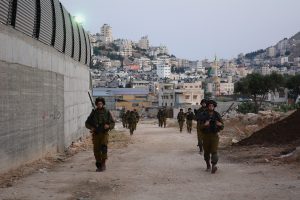
    Israeli soldiers patrol along the West Bank barrier near Hebron, June 17, 2014 (IDF)

    Most of Israel’s critics argue that any Israeli claim to the moral high ground is compromised by the fact that the Israeli military has been dominating the West Bank since 1967, thereby denying the Palestinians the ability to ever form their own state. While of course there is truth to this argument, it nevertheless ignores a critical point: Israel believes it must control the West Bank, at least for now, in order to ensure its own continued safety over the long-term.

    Even though religion is the key motivator for most of the Jews (and Christians) who have settled or support Jewish settlement within the West Bank, Israel’s desire to control the West Bank is not ultimately rooted in religion, but rather in physical geography and “strategic necessity.”

    By dominating the West Bank, Israel gains control over the Jordan Rift Valley, a steep-walled, incredibly deep canyon containing a number of the points on Earth that are the furthest below sea level through which the Jordan River runs into the Dead Sea. The rift valley serves as an excellent defensive barrier against invasion or incursion. Israel enjoys using it both as a defensive border with Jordan and as a security barrier separating the roughly three million Palestinians living in Jordan from the three million Palestinians living in the West Bank. (more…)

  • The Return of the Atlantic

    For nearly five hundred years, the Atlantic Ocean was the unrivaled center of the international system, connecting Europe to its expansive economic and colonial networks in Africa, Asia and the Americas. As recently as the late 1980s, the value of transatlantic trade exceeded that of commerce across the Pacific while the Atlantic alliance against the Soviet Union was the world’s most important geopolitical partnership. Until the mid-1990s, all ten of the world’s largest economies except Japan were Atlantic nations. And just a little over a century before that — before the emergence of the Japanese, Central European and Californian economies in the 1870s — the coastlands of the Atlantic had dominated the global economy and political system like never before.

    Today, by contrast, the European Union and United States each import more goods from China than they do from one another and the Atlantic military alliance has become less important since the Cold War ended 25 years ago.

    The Pacific Ocean is now the home of the world’s three largest economies, the highway for East Asian imports of commodities and exports of manufactured goods and the base for nearly 75 percent of American soldiers stationed outside Afghanistan and the continental United States. It has in many ways become the new center of the world.

    Many economists and political scientists believe that continued economic growth in populous Asian countries like China, India and Indonesia means that the centrality of the Pacific has only just begun. Many politicians agree. In 2011, Hillary Clinton, then America’s secretary of state, argued her country was entering a “Pacific century.” Yet it may turn out that the Atlantic will actually return to the center of international commerce and serve as the organizing force of global geopolitics. (more…)